
Connecticut Issues Cease-and-Desist Orders to Nine Prediction Market Platforms — What Traders Need to Know
Connecticut ordered nine prediction market platforms to stop sports contracts and issued 29 subpoenas. Here's what CT traders need to know.
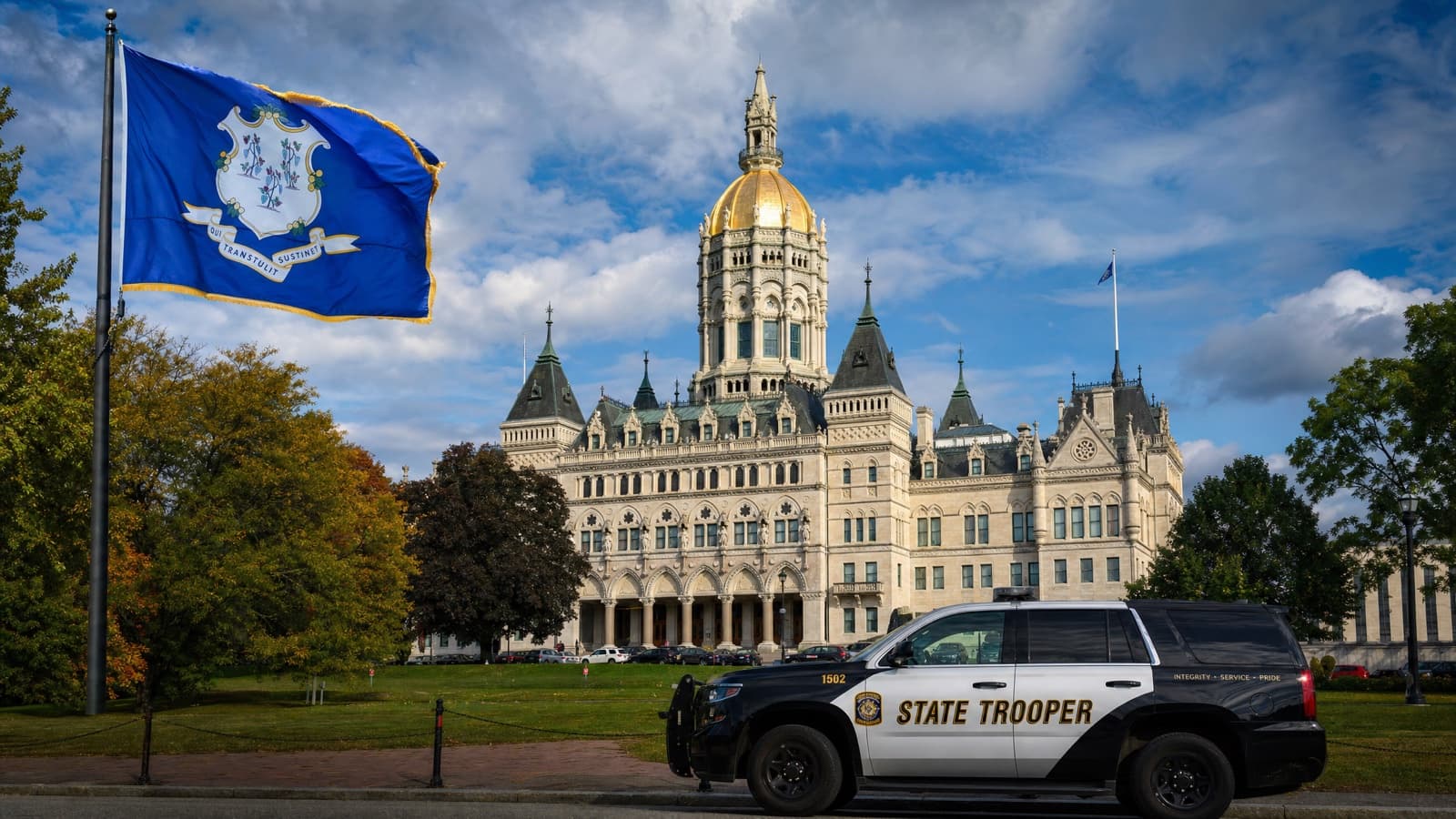
Connecticut issued cease-and-desist orders to nine prediction market platforms on September 10, 2026 — the largest single-sweep state enforcement action in the industry's history. Governor Ned Lamont, Attorney General William Tong, and Department of Consumer Protection (DCP) Commissioner Bryan T. Cafferelli announced the action, which reaches far beyond Kalshi's ongoing court battle and now targets nearly every major name in the U.S. prediction market space.
If you trade on any of the named platforms and live in Connecticut, here's exactly what happened, what it means for your account, and where this fight is headed.
The Nine Platforms Connecticut Ordered to Stop
The Connecticut DCP issued cease-and-desist orders to the following nine platforms, directing each to immediately halt advertising, offering, promoting, or making available "sports event contracts" or any other form of unlicensed online gambling to Connecticut residents:
- Polymarket (QCX LLC / Polymarket US)
- Coinbase (event contracts via Kalshi infrastructure)
- Crypto.com (via CDNA exchange)
- Robinhood (Robinhood Derivatives, via Kalshi)
- ProphetX (CFTC-approved DCM, approved June 2026)
- Novig (Ludlow Exchange LLC, CFTC DCM approved June 2026)
- Webull (via Kalshi infrastructure)
- Gemini (Gemini Predictions, DCM application pending)
- Underdog Predict (via Crypto.com CDNA)
All nine platforms were also ordered to allow Connecticut residents to withdraw any funds currently held in their accounts. Failure to comply, the DCP warned, may result in civil penalties under the Connecticut Unfair Trade Practices Act and criminal penalties for violations of Connecticut gaming statutes.
Notably, Kalshi is not on this list — the state's original DCM target is now the subject of a separate civil lawsuit in Connecticut Superior Court, where Kalshi lost a bid for a preliminary injunction in August.
The Subpoenas: Going After the Infrastructure
The enforcement action went well beyond the platforms themselves. Connecticut issued 29 subpoenas across three categories, targeting the companies that power prediction market operations in the state.
Nine gaming service provider license holders received subpoenas for information about how platforms operate:
- PayPal, LexisNexis, Plaid, Paysafecard, Integrity Compliance 360 (IC360), Sportradar Solutions, Genius Sports Media, Genius Tech International, and Socure Inc.
Fifteen Connecticut media organizations received subpoenas focused on how prediction markets advertise in the state, including ESPN, Hartford Courant, NBC CT, Hearst Connecticut Media, The Patch, The Day, Fox61/Tegna, WFSB/Gray, WTNH/WCTX, Audacy, Connoisseur Media, iHeartMedia, Red Wolf, CT News Project, and Norwich Bulletin.
Five app stores and payment processors also received subpoenas: Apple App Store, Google Play, Apple Pay, Google Wallet, and Stripe.
DCP stressed that subpoena recipients are not under investigation — they received subpoenas because they may possess information pertinent to the state's inquiry. But the reach of those subpoenas signals a strategy that legal observers have noted before: if you can't shut down the exchanges directly, attack the infrastructure that allows them to operate.
"You cannot run a prediction market if you can't process the payments," legal analyst Evan Glaser noted in reporting by SBC Americas. "If you can't touch prediction market operators, get at the supporting ecosystem."
Commissioner Cafferelli framed the action in consumer protection terms: "Our laws are clear: sports betting may only be offered by legal, licensed sportsbooks that adhere to our regulations and technical standards. We are, first and foremost a consumer protection agency, and we will continue to do everything we can to protect all Connecticut consumers from misleading business practices that compromise their health and safety, personal information and hard-earned money."
One Platform Has Already Agreed to Comply
Commissioner Cafferelli confirmed to WSHU (NPR Connecticut) that one of the nine platforms has already committed to complying with the cease-and-desist order. He did not name the platform.
"We are hopeful these actions will curb illegal prediction market activity in our state, especially as the betting season ramps up with the start of the NFL season this week," Cafferelli said.
How Connecticut Got Here: A Timeline
This week's sweep is the latest step in a campaign that Connecticut has been building since late 2025.
December 2025: Connecticut issued its first round of cease-and-desist orders to Kalshi, Robinhood Derivatives, and Crypto.com. Kalshi immediately moved to federal court, arguing that its CFTC registration under the Commodity Exchange Act preempted state enforcement. Coinbase filed a similar motion in the U.S. District Court for the District of Connecticut.
April 2, 2026: The CFTC escalated on behalf of the platforms, filing federal complaints against Connecticut, Arizona, and Illinois — arguing that state gambling regulators cannot override federal commodity law.
August 2026: A federal judge in Connecticut dealt Kalshi a significant blow, ruling that sports event contracts are illegal unlicensed gambling and are not protected by the Commodity Exchange Act. The judge denied Kalshi's request for a preliminary injunction, concluding the exchange was unlikely to prevail on its preemption argument. Days later, the Ninth Circuit reached a similar conclusion in the Nevada case, ruling that states like Nevada are within their rights to enforce gambling laws against prediction market platforms.
Early September 2026: Connecticut AG William Tong filed a civil lawsuit against Kalshi, separately seeking a court injunction to block the platform from operating in the state.
September 10, 2026: Connecticut expanded its enforcement net to nine additional platforms — a move that effectively signals the state believes its legal theory is strong enough to fight on multiple fronts simultaneously.
The Jurisdictional Question at the Center of This Fight
Prediction markets like Kalshi and Polymarket US are regulated federally by the CFTC as designated contract markets (DCMs). The platforms have consistently argued that federal oversight under the Commodity Exchange Act preempts state gambling laws under the Supremacy Clause of the U.S. Constitution.
Connecticut — and an increasing number of states — disagrees. Their argument: regardless of how the contracts are structured or labeled, a bet on a sports game outcome is a sports bet. Connecticut legalized sports wagering in 2021, permitting it only through licensed sportsbooks: Fanatics locations in partnership with the Connecticut Lottery Corp., DraftKings at Foxwoods Resort Casino, and FanDuel at Mohegan Sun.
"They're indistinguishable from sports wagering, except they don't have consumer protections and they aren't adhering to our laws, our regulations, or our technical standards," Commissioner Cafferelli told NBC Connecticut.
The platforms counter that attempting to block federally regulated exchanges could push market activity offshore to unregulated venues with no consumer safeguards — an outcome they argue is worse for Connecticut residents than allowing regulated trading to continue.
At this moment, courts have not issued any order blocking Connecticut from sending cease-and-desist orders. But courts have also not issued any order requiring the nine platforms to comply with them. The jurisdictional question remains live and unresolved — and is heading toward the U.S. Supreme Court, where Robinhood has petitioned for review of the Ninth Circuit's Nevada ruling.
Connecticut's Enforcement Runs Alongside a Coordinated Democratic Governors Strategy
The September 10 announcement was timed alongside the Democratic Governors Association (DGA) annual meeting, where prediction markets were confirmed to be on the formal agenda. Event Horizon editor Ryan Gouker confirmed the DGA coordination, noting that Connecticut's sweep appears to be part of a broader organized opposition effort — not purely a local consumer protection initiative.
Governor Lamont's statement framed the issue in national terms: "Connecticut has been at the forefront of this issue, leading the way in protecting consumers — including young people, student athletes, and those suffering from gambling addiction — from unregulated gambling markets, which put your money and information at risk."
What Connecticut Traders Should Do Right Now
If you hold an account on any of the nine named platforms and live in Connecticut:
1. Your funds are protected. All nine platforms were ordered to allow Connecticut residents to withdraw their funds. This is a cease-and-desist, not an asset freeze. Your money is not at risk, but access to new trading may be restricted.
2. Watch for geofencing announcements. Platforms that decide to comply with the C&D will likely implement IP or residency-based geofencing for Connecticut users, similar to what Kalshi implemented in Washington state. Monitor your platform's official communications for any access changes.
3. Non-sports markets may be unaffected. The orders specifically target "sports event contracts." Platforms that offer separate election, financial, or other non-sports markets may continue providing those to Connecticut users even while halting sports trading. Check your platform's terms for clarification.
4. The situation is still evolving. No court order currently requires compliance. Platforms that choose to challenge the C&D orders in court could continue operating while litigation proceeds — accepting the risk of enforcement escalation. Others may comply voluntarily to avoid civil and criminal penalties.
Frequently Asked Questions
Is this the same as the Kalshi lawsuit? No. The Kalshi situation involves a separate civil lawsuit filed by the Connecticut AG in August 2026, currently being litigated in Connecticut Superior Court. The nine platforms named in this sweep received cease-and-desist administrative orders — a different legal instrument that doesn't require court filing and can be issued by the DCP directly.
Is this a criminal matter? Not at this stage. These are civil cease-and-desist orders under Connecticut consumer protection and gaming law. The DCP warned that criminal penalties are possible for ongoing violations — but the initial action is civil enforcement.
Why did Connecticut subpoena media companies? Connecticut regulators want to understand how prediction markets advertise to Connecticut residents, including whether ads were directed at underage users or people on the voluntary gambling self-exclusion list. Subpoena recipients are not suspects; they are witnesses to how these platforms market themselves in the state.
Will this affect Kalshi users in Connecticut? Kalshi is already subject to the separate August lawsuit. This new sweep doesn't add to Kalshi's legal exposure directly — but it increases the political and legal pressure on the entire industry simultaneously.
What happens if platforms ignore the cease-and-desist? Connecticut can pursue civil penalties under the Connecticut Unfair Trade Practices Act and escalate to criminal referrals under its gaming statutes. The state can also seek court enforcement of the orders, requiring platforms to appear before a judge.
The Bigger Picture: A Multi-State Reckoning
Connecticut's nine-platform sweep is happening in the context of a rapidly escalating national jurisdictional fight. Multiple states have active legal proceedings involving prediction market platforms: Michigan has a state court injunction against Kalshi (with appeals pending in the Sixth Circuit), Utah's enforcement action was upheld by the Tenth Circuit, Nevada prevailed in the Ninth Circuit, and New Jersey has petitioned the U.S. Supreme Court for review.
As of September 2026, no state action at the Supreme Court level has been decided — meaning the fundamental question of whether federal CFTC registration overrides state gambling law remains open. Until that question is resolved, the pattern is likely to repeat: more states, more platforms, more subpoenas.
Prediction markets have grown rapidly in 2026, with platforms recording billions in volume weekly. Connecticut's move to name nine platforms simultaneously — including major brokerages like Coinbase and Robinhood, not just crypto-native exchanges — signals that state regulators are no longer treating this as an edge-case fintech dispute. They're treating it as a mainstream gambling enforcement problem.
For traders, that means the state-by-state patchwork of access restrictions is almost certainly going to get more complicated before it gets simpler.
Sources & Verification
- Connecticut DCP cease-and-desist announcement — WSHU (NPR Connecticut) — September 11, 2026
- NBC Connecticut — CT DCP cease-and-desist letters to prediction markets — September 10, 2026
- CT News Junkie — CT Takes More Action Against Prediction Markets — September 11, 2026
- Gaming Intelligence — Connecticut takes aim at remaining prediction market platforms — September 11, 2026
- Greenwich Free Press — Governor Lamont press release on CT DCP actions — September 11, 2026
- Event Horizon (Ryan Gouker) — Prediction Markets on Democratic Governors Association agenda — September 11, 2026