
Every Bill Targeting Prediction Markets in Congress: A 2026 Tracker
More than 10 bills targeting prediction markets have been introduced in Congress in 2026. Here is every bill, every sponsor, and what each one would do.
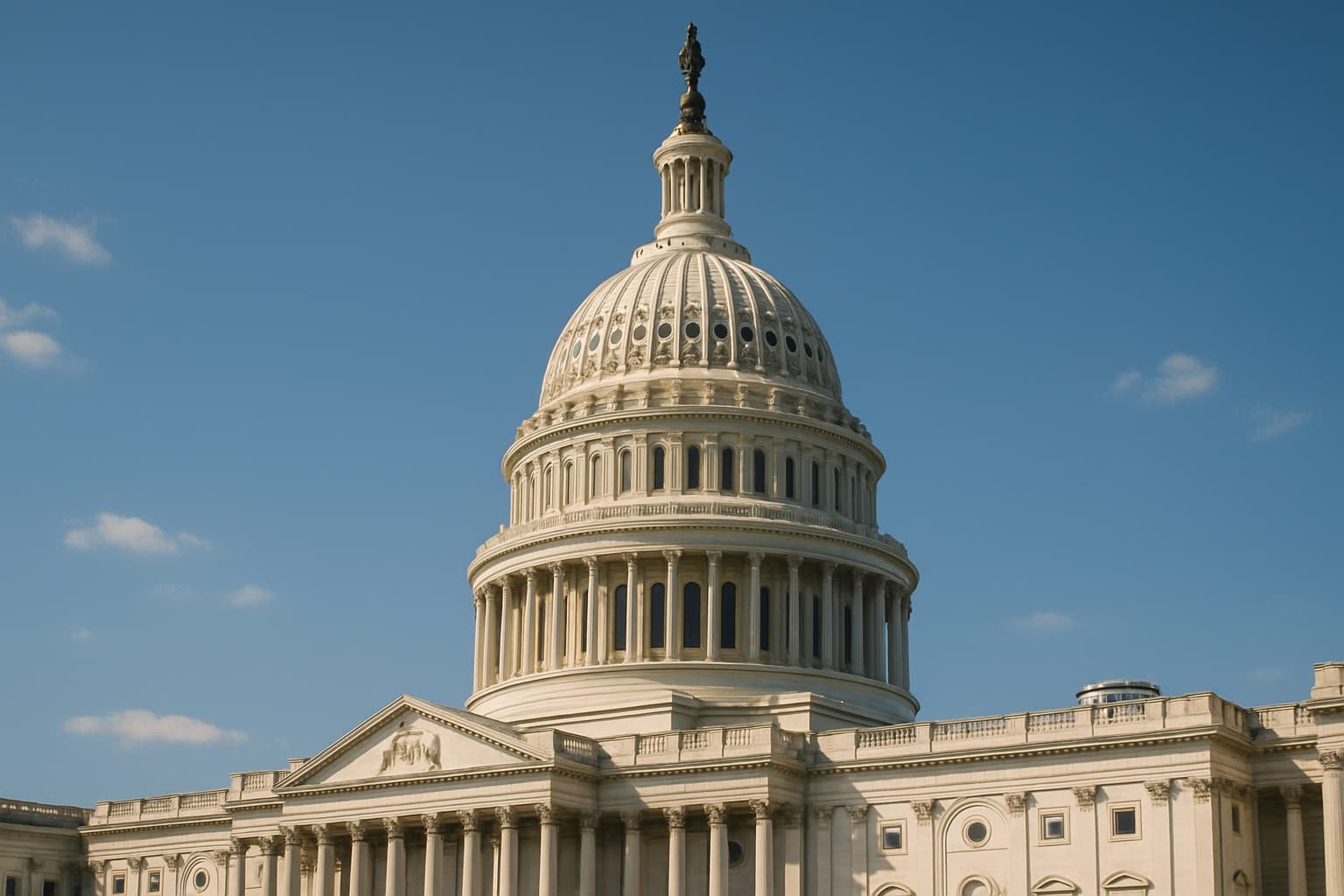
Washington has a new obsession: prediction markets.
In the span of six weeks, more than ten pieces of legislation targeting platforms like Kalshi and Polymarket were introduced in Congress — making the 119th Congress the most legislatively active session ever on prediction market regulation. The catalyst was not sports betting, not consumer protection, and not a lobbying blitz from the gambling industry. It was a single explosive fact: government officials appear to have made millions in perfectly timed bets on wars they helped start.
When U.S. military strikes hit Iran in February 2026, blockchain analytics firm Bubblemaps identified six newly created wallets that collectively made roughly $1.2 million in profits on Polymarket's "U.S. strikes Iran" contract in the 24 hours surrounding the attack. (Reuters, March 2, 2026) A separate investigation found unusual wallet activity tied to a ChatGPT product launch, with 13 new wallets betting $309,486 on the outcome.
These are not confirmed illegal acts. That is precisely the problem. Unlike insider trading in the stock market — which is illegal and heavily prosecuted under SEC rules — no specific law prohibits government officials from using classified knowledge to profit on prediction markets. Congress is now trying to fix that, and then some.
Here is every significant bill introduced, who's behind it, what it would do, and whether it has any realistic chance of becoming law.
The Bipartisan Bills (Most Likely to Pass)
These three bills have co-sponsors from both parties — the minimum threshold for serious Senate consideration.
PREDICT Act
Sponsors: Rep. Nikki Budzinski (D-IL) and Rep. Adrian Smith (R-NE) — House, introduced March 25, 2026
The full name is the Preventing Real-time Exploitation and Deceptive Insider Congressional Trading Act. It would ban members of Congress, their spouses and dependent children, senior executive branch officials, and political appointees from trading prediction market contracts related to political events, policy decisions, and government actions.
The penalty structure is aggressive: 10% of the transaction value plus full disgorgement of any profit. The bill covers both federally regulated platforms like Kalshi and crypto-native platforms like global Polymarket.
The Coalition for Prediction Markets, the industry trade group that counts Kalshi as a member, endorsed the PREDICT Act shortly after its introduction — a clear signal that the platforms would rather accept narrow ethics rules than face broader restrictions. (Politico, March 26, 2026)
Public Integrity in Financial Prediction Markets Act
Sponsors: Sen. Todd Young (R-IN), Sen. Elissa Slotkin (D-MI), Sen. John Curtis (R-UT), Sen. Adam Schiff (D-CA) — Senate, March 26, 2026
The broader Senate version targets a wider circle of government officials: the president, vice president, all members of Congress, their staff, political appointees, and employees of every executive and independent regulatory agency.
Prohibited trading is defined as using information that "a reasonable investor would consider important" and that is not publicly available. Penalties are the greater of $500 or twice the profit earned. Any covered trade over $250 must be reported within 30 days to a supervising ethics office — with required disclosure of the number of contracts, price, date, position taken, platform used, and profit or loss. (Senator Curtis official press release, March 26, 2026)
"No one should be profiting off the information and knowledge gained as a public servant, period," said Sen. Slotkin. "This bill is an important first step in placing common-sense rules around prediction markets."
The bill covers contracts "offered on a U.S. or foreign domiciled platform" — meaning it applies to both Kalshi and global Polymarket, not just CFTC-regulated venues. (Senator Young official press release, March 26, 2026)
Prediction Markets Are Gambling Act
Sponsors: Sen. Adam Schiff (D-CA) and Sen. John Curtis (R-UT) — Senate, March 23, 2026
The most structurally significant bipartisan bill. It would amend the Commodity Exchange Act to prohibit CFTC-regulated entities from listing contracts that resemble "a sports bet or casino-style game" — effectively forcing sports markets off platforms like Kalshi unless explicitly authorized under state law.
This is the existential fight. If prediction markets lose the "financial instrument" classification and fall under "gambling" for sports contracts, they become subject to state regulation, tribal compact authority, and the patchwork of gaming commissions that currently govern sports betting. Revenue, licensing, and market access implications would be massive.
The Schiff-Curtis bill directly echoes arguments state attorneys general from Nevada to Arizona to Massachusetts are already making in federal court. For context on that parallel fight, see State Attorneys General vs. Prediction Markets: The Legal Battle.
Democrat-Only Bills (Messaging and Pressure)
These bills set the Overton window and apply political pressure, but none is expected to pass a Republican-controlled Congress with strong Trump family ties to the industry.
STOP Corrupt Bets Act
Sponsors: Sen. Jeff Merkley (D-OR), Sen. Elizabeth Warren (D-MA), Rep. Jamie Raskin (D-MD) — March 26, 2026
The broadest proposed restriction: would prohibit prediction market contracts on elections, sports, government actions, and military matters. Also requires a Government Accountability Office study on the industry. Designed to send a comprehensive regulatory message.
DEATH BETS Act
Sponsors: Sen. Adam Schiff (D-CA) — Senate, March 10, 2026
Would explicitly prohibit CFTC-registered platforms from listing contracts involving terrorism, assassination, war, or individual death. The CFTC currently has discretion over which contract categories to permit; this bill would remove that discretion entirely for these categories. Kalshi has already voluntarily banned war and death contracts on its platform. (Politico, April 1, 2026)
BETS OFF Act
Sponsors: Sen. Chris Murphy (D-CT) and Rep. Greg Casar (D-TX) — March 17, 2026
One of the more conceptually interesting bills: it would ban wagers on events "where an individual knows or controls the outcome." The language catches insider trading in cases the more narrowly drafted ethics bills might miss. For a full breakdown, see The BETS OFF Act Explained.
End Prediction Market Corruption Act
Sponsors: Sen. Jeff Merkley (D-OR) and Sen. Amy Klobuchar (D-MN) — early March 2026
A categorical ban: the president, vice president, and every member of Congress would be prohibited from trading any event contracts — not just political ones, not just when they have inside information. The broadest elected-official restriction proposed.
Public Integrity Act (House)
Sponsor: Rep. Ritchie Torres (D-NY) with 28+ co-sponsors — January 2026
The first significant prediction market ethics bill of the 119th Congress. Covers elected officials and political appointees trading on government-related contracts while in possession of material nonpublic information. Torres introduced it after suspiciously timed trades on Venezuela-related markets in January 2026 drew public attention. (NPR, March 14, 2026)
Prediction Markets Security and Integrity Act
Sponsors: Sen. Richard Blumenthal (D-CT) and Sen. Andy Kim (D-NJ) — Senate
Requires the CFTC to establish formal rules defining which contracts are permissible, bans conflicted contracts, and prohibits use of MNPI. More comprehensive regulatory framework legislation than the narrower ethics-focused bills.
Fair Markets and Sports Integrity Act
Sponsors: Rep. Blake Moore (R-UT) and others — House
Notably, this bill crosses the partisan divide from a different direction: rather than expanding federal oversight, it would return sports jurisdiction to states. It would ban prediction market wagers on sports, terrorism, war, and assassinations unless state law specifically permits — effectively giving states authority to allow or block these categories.
The Disclosure Blind Spot
One fact that makes every ethics bill above necessary: under current law, members of Congress, White House staff, and political appointees are not required to disclose their prediction market positions at all.
Financial disclosure rules require reporting on stocks, bonds, cryptocurrency, futures contracts, and real estate. Event contracts and prediction markets are not mentioned anywhere in current guidance.
"As of right now, there is no requirement to report event contracts, none whatsoever," said Sen. Merkley. "That's a massive blind spot." (NPR, March 14, 2026)
Former House Ethics Committee chief counsel Blake Chisam described the situation as a blind spot rather than a loophole: "The rules were written for blue-chip stocks and mutual funds, not yes-or-no bets on the next speaker, and the ethics framework simply hasn't caught up yet."
Even if reporting were required, platforms like global Polymarket allow anonymous trading via cryptocurrency wallets — meaning the public might still never learn which government officials are betting on markets they influence.
Where This Goes Next
Any prediction market legislation will be handled by the House and Senate Agriculture committees, which oversee the CFTC. House Agriculture Chair G.T. Thompson (R-PA) has promised "bipartisan hearings and member meetings" on prediction markets. Senate Commerce Committee members have also discussed holding a hearing focused on the industry. (Politico, April 1, 2026)
Senate Agriculture Chair John Boozman (R-AR) — whose committee has formal jurisdiction — has expressed concerns about sports betting on prediction market platforms, a signal that even the Republican chair with oversight authority could be persuadable on targeted sports restrictions.
Republican Senate leadership is so far largely absent. Senate Majority Leader John Thune, when asked about banning officials from trading on prediction markets, said he "hadn't thought about that" and would "take a look at it."
The Trump Factor
The reason legislative momentum faces headwinds in a Republican Congress: the Trump family is deeply tied to both leading platforms. Donald Trump Jr. is an adviser to both Kalshi and Polymarket. Trump's social media company has announced plans for Truth-Predict, a new prediction market service. Trump's CFTC Chair Mike Selig has said the administration supports "lawful innovation in these markets" and that the CFTC has "exclusive jurisdiction" over them — directly contradicting the state-level restrictions the Schiff-Curtis and Moore bills would enable.
"I don't think the Republican-led House or Senate will seriously take this on," said Sen. Merkley.
The Irony: You Can't Bet on Any of This
More than ten bills have targeted prediction markets. Two committee chairs have promised hearings. Both the House and Senate have bipartisan bills on insider trading. And yet: neither Kalshi nor Polymarket has listed a market on whether Congress will actually regulate them.
That absence is deliberate. For Kalshi, which runs DC ads touting its anti-insider-trading policies and has Trump Jr. on its advisory board, listing "Will Congress pass the PREDICT Act?" is a political self-own. For Polymarket, the conflict of interest is equally obvious.
The result: prediction market traders — who use these platforms specifically because they believe collective market pricing is more accurate than expert forecasts — have no formal mechanism to price the odds of the industry's own regulatory fate.
FAQ
What prediction market bill is most likely to pass? The two bipartisan insider trading bills — the PREDICT Act in the House and the Public Integrity in Financial Prediction Markets Act in the Senate — have the strongest odds. Both have cross-party support, and the industry itself endorsed the House version. They address a genuine governance concern without threatening the core prediction market business model.
Would any bill shut down Kalshi or Polymarket? No. Even the most expansive ethics bills restrict only who can trade, not whether platforms can operate. The Prediction Markets Are Gambling Act (Schiff-Curtis) would be the most disruptive to the business model — it would remove sports contracts from CFTC-regulated platforms — but it would not eliminate political, economic, or other markets.
Which committee handles prediction market legislation? The House and Senate Agriculture committees have jurisdiction because they oversee the CFTC. Both chairs are engaged, though as of April 2026, no formal hearings have been publicly scheduled. Senate Commerce is also circling the issue.
Are prediction market trades currently required to be disclosed? No. Current financial disclosure rules make no mention of event contracts or prediction markets. The PREDICT Act and the Public Integrity in Financial Prediction Markets Act would both create new reporting obligations.
Do Kalshi and Polymarket already ban insider trading voluntarily? Yes. Kalshi bans political candidates from trading their own election markets and prohibits trading by those with material nonpublic information. Polymarket updated its rules in March 2026 to explicitly bar users from trading on events they could influence. The proposed bills would make these restrictions legally enforceable rather than platform policy. For a deeper look, see Insider Trading and Prediction Markets: What's Legal?
Conclusion
Congress has gone from barely aware of prediction markets to drafting more than ten bills in six weeks. The insider trading threat resonates across party lines — making limited ethics legislation genuinely possible in the near term. The sports gambling classification fight is the existential battle for the industry, and it is playing out simultaneously in the courts.
For traders and investors in prediction markets, the practical takeaway: the bipartisan insider trading bills are likely to pass in some form, and the industry has already signaled it can live with them. The sports contract fight will take longer, and the outcome may ultimately be decided by the Supreme Court, not the 119th Congress.
To understand the parallel legal battles, see Prediction Markets State Legal Battle 2026 and CFTC Prediction Markets Rulemaking 2026.
Sources & Verification
- Public Integrity in Financial Prediction Markets Act details: Sen. Curtis press release, March 26, 2026 — verified April 13, 2026
- Same bill confirmed: Sen. Young press release, March 26, 2026 — verified April 13, 2026
- Comprehensive bill coverage and congressional dynamics: Politico, April 1, 2026 — verified April 13, 2026
- Committee activity, G.T. Thompson quote: Politico Inside Congress, April 1, 2026 — verified April 13, 2026
- Disclosure gap, Merkley quote, Blake Chisam quote: NPR, March 14, 2026 — verified April 13, 2026
- PREDICT Act bipartisan endorsement: Politico, March 26, 2026 — verified April 13, 2026
- Congressional Research Service on insider trading law and prediction markets: congress.gov CRS LSB11406, April 3, 2026 — verified April 13, 2026