
The CLARITY Act Could Reach the Senate Floor in Nine Days. Here's What 40% Odds Are Really Telling You.
The Senate returns July 13 with the CLARITY Act targeting a floor vote the week of July 20. Prediction markets are at 40% — down from 74% in May. Here's what bettors know that the optimists don't.
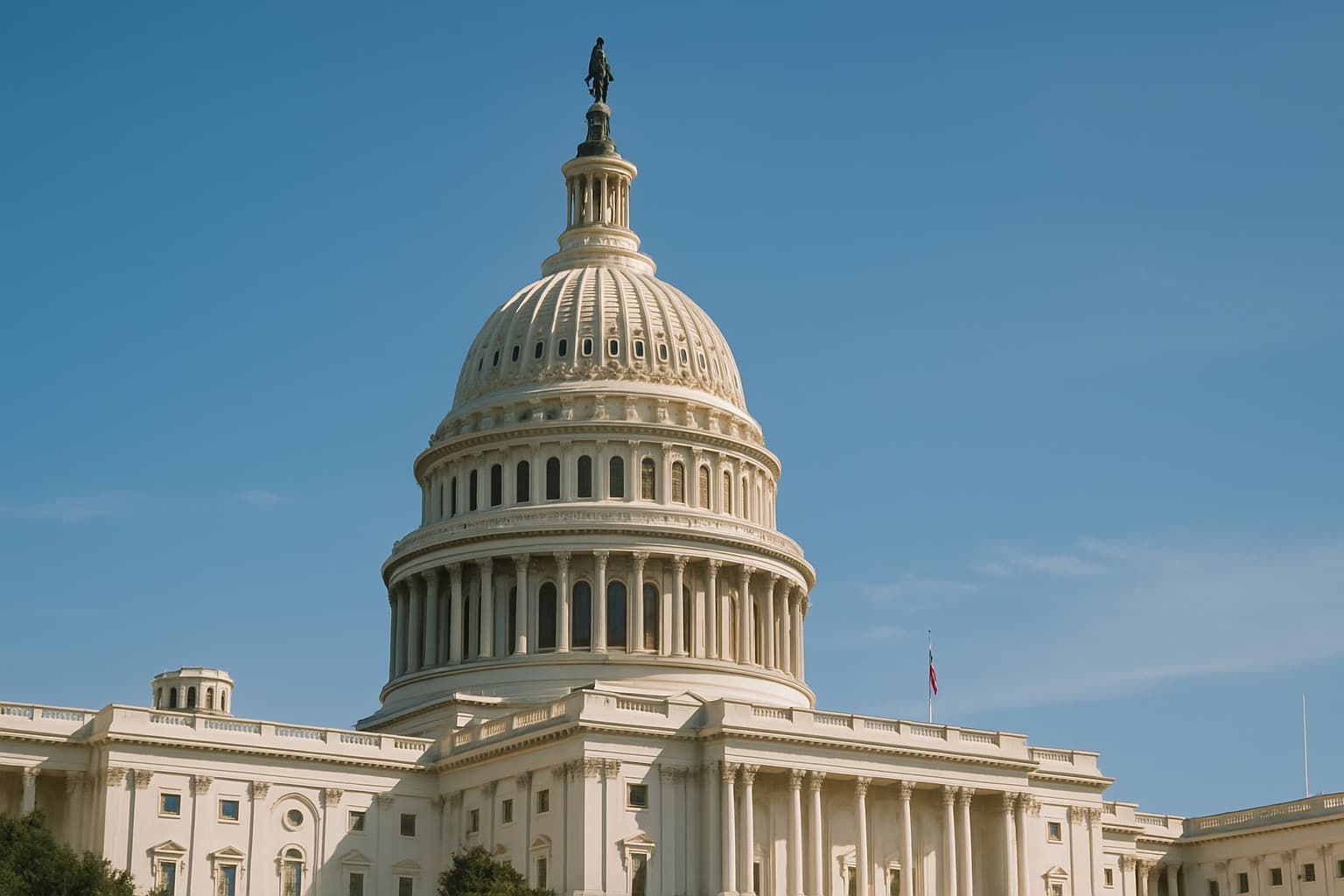
The Senate returns from recess on July 13. Within days, Senate Majority Leader Thune is expected to decide whether to schedule a floor vote on the Digital Asset Market CLARITY Act — the most consequential piece of crypto legislation in U.S. history, and a bill whose outcome will directly reshape the legal map for every prediction market in America.
Supporters are still talking about passage as inevitable. Prediction markets are not so sure. Polymarket currently prices the bill's chance of becoming law in 2026 at roughly 40% — a decline of more than 30 percentage points from the 74% it hit immediately after the Senate Banking Committee vote in May. Kalshi markets have tracked even lower, pricing 2026 enactment in the 36–44% range.
The divergence between the optimistic narrative and the money is the story. Understanding why the markets are skeptical — and what would change their minds — tells you nearly everything you need to know about what actually happens next.
What Is the CLARITY Act?
The Digital Asset Market CLARITY Act, formally H.R. 3633, is a comprehensive framework bill that establishes regulatory clarity for digital commodity markets in the United States. It passed the U.S. House of Representatives in July 2025 and has since sat on the Senate Legislative Calendar as Calendar No. 423.
At its core, the CLARITY Act clarifies the jurisdictional boundary between the Commodity Futures Trading Commission (CFTC) and the Securities and Exchange Commission (SEC) over digital asset products. It defines what qualifies as a digital commodity, establishes consumer protection standards, and creates a registration pathway for digital asset exchanges — addressing years of regulatory ambiguity that has left crypto companies operating in legal gray zones.
For the prediction market industry, the CLARITY Act matters for two distinct reasons: what it includes, and what its passage or failure signals about the broader federal regulatory environment.
What's Actually at Stake for Prediction Markets
The American Gaming Association (AGA) and the Indian Gaming Association (IGA) have been lobbying hard to attach explicit language to the CLARITY Act that would prohibit prediction market platforms from offering sports event contracts under CFTC oversight. Their argument: sports-related event contracts should be treated as a form of sports betting subject to state gambling law, not federal commodities regulation.
In a joint letter to lawmakers on May 16, 2026, the AGA and IGA argued that without a sports carve-out, passage of the CLARITY Act could entrench the current arrangement under which platforms like Kalshi and Polymarket operate outside state gambling law. The gaming lobby's position: CFTC registration should not be a legal backdoor around state sports betting restrictions.
Prediction market operators and the CFTC itself have pushed back aggressively. The Commission has sued multiple states — including Wisconsin, Arizona, and New York — asserting exclusive federal jurisdiction over CFTC-registered event contract markets. From the CFTC's perspective, if Congress authorized prediction markets under the Commodity Exchange Act, states cannot simply override that authorization through gambling enforcement.
The judicial picture is genuinely split. The Third Circuit's April 2026 ruling in KalshiEX LLC v. Flaherty upheld federal preemption over New Jersey's attempt to block sports event contracts — a significant appellate win for platforms. But in July 2026, Southern District of New York Judge Analisa Torres reached the opposite conclusion, finding that New York gambling laws apply to Kalshi's sports-related event contracts and denying Kalshi's preliminary injunction. Courts are now pointing in different directions, which is precisely why a congressional resolution matters.
If the CLARITY Act passes with a sports carve-out, platforms could face a significantly narrowed product offering. If it passes without one, the federal preemption framework would be legislatively reinforced — making it dramatically harder for states to prevail in court. If it fails entirely, the judicial cage match continues for years.
The Prediction Market Verdict
The gap between what analysts say and what markets price is unusually wide for the CLARITY Act.
| Source | CLARITY Act 2026 Passage Odds | As Of |
|---|---|---|
| Polymarket | ~40% | July 10, 2026 |
| Kalshi | 36–44% | July 10, 2026 |
| Galaxy Research (institutional) | ~50% | June 30, 2026 |
| Stifel (Brian Gardner) | Deteriorates if August recess missed | July 7, 2026 |
| Astraea Law | ~August 2026 target, reconciliation risks | Ongoing |
Galaxy Digital, the institutional crypto investment firm, has backed its analysis with real money — the firm placed a $10 million prediction market trade on 2026 passage, while simultaneously revising its own estimated odds downward from 75% to approximately 50%.
The trend line is unambiguous. In mid-May, when the Senate Banking Committee voted 15–9 to advance the bill, optimism peaked. Two Democrats — Sen. Ruben Gallego (D-AZ) and Sen. Angela Alsobrooks (D-MD) — voted yes, giving the bill a nominal bipartisan credential. Markets priced 74% odds. Galaxy Research raised its estimate to 75%.
Then the obstacles came into focus.
Three Things Standing Between the CLARITY Act and Law
1. The 60-Vote Math
The Senate has 53 Republican seats. The bill needs 60 votes to clear the filibuster threshold — requiring at least 7 Democratic votes beyond the current Republican baseline. The only two Democrats who backed the bill at committee, Gallego and Alsobrooks, have both explicitly warned that committee support does not guarantee floor support.
As of July 10, Senate Banking and Agriculture Committee staff have merged their respective versions of the legislation into a single combined draft, reportedly adding more than 70 pages of new language emphasizing consumer protections. Supporters hope the revised bill could reach the Senate floor during the week of July 20. But negotiators acknowledge several major issues remain unresolved.
2. The Ethics Provision
The largest sticking point is Democratic demands for stronger ethics restrictions preventing senior government officials — including the president — from maintaining business ties with the cryptocurrency industry while in office. This became significantly more fraught after President Trump disclosed approximately $1.4 billion in crypto-related assets in July, causing prediction market odds to slide as low as 39% on Polymarket.
Two rounds of closed-door negotiating sessions have broken down. Republicans offered to limit ethics enforcement to the U.S. Attorney General rather than state attorneys general; Democrats rejected the proposal. Republicans then floated impeachment as a remedy for presidential ethics violations; Democrats declined. Senators Mark Warner (D-VA) and Catherine Cortez Masto (D-NV) have linked their floor support directly to law enforcement signing off on Section 604 of the bill, which governs blockchain developer liability — a provision currently opposed by the National District Attorneys' Association, the National Sheriffs' Association, and the National Association of Assistant U.S. Attorneys.
3. Senate Agriculture Committee Reconciliation
The Senate Banking Committee's version of the CLARITY Act must be reconciled with the Senate Agriculture Committee's parallel version covering CFTC jurisdiction over digital commodities. The merged July draft appears to resolve many differences, but each step of the reconciliation process consumes additional floor time on a calendar that is running critically short.
The August 7 Deadline
Why does the next three weeks matter so much? Because August 7 is when Congress heads home for recess, and analysts broadly agree: if the CLARITY Act does not pass the Senate before then, it almost certainly will not pass at all in 2026.
Brian Gardner, chief Washington policy strategist at Stifel, wrote that the bill "probably needs to get through the Senate by the end of July, preferably in June," adding that "if the Senate fails to pass the bill before the August recess, the bill's prospects would deteriorate materially." Beacon Policy Advisors characterized a missed August window as potentially ending the 2026 path entirely.
The reason is structural: the fall calendar fills up with midterm campaign season, floor time becomes scarce, and legislators focus on their districts rather than complex financial regulation. Senator Cynthia Lummis (R-WY), one of the bill's strongest advocates, has warned that failure to pass the CLARITY Act in 2026 could delay comprehensive crypto market structure legislation until 2030.
A floor vote during the week of July 20 — just nine days from the Senate's return — would give the bill a narrow but real path to enactment.
What Would Change the Odds?
Prediction markets are pricing real obstacles that the optimistic narrative underweights. But at 40%, markets are not calling this dead — they are saying it is a genuine coin flip with downside skew.
The specific scenarios that move the needle:
- Ethics deal reached by July 15: If negotiators can agree on a presidentially neutral ethics provision, Warner and Cortez Masto's conditions may be met, and the Democratic vote math improves. Odds would likely jump toward 60%.
- Sports carve-out dropped from final bill: If the gaming lobby's sports event contract provision is excluded, prediction market platform operators drop their opposition and the bill picks up industry lobbying muscle. This is also the most consequential variable for traders currently using Kalshi and Polymarket sports markets.
- Floor vote formally scheduled for July 20 week: A scheduled vote signals Thune has the 60 votes. Markets would immediately re-rate upward.
- No deal by July 25: At that point, the August recess deadline becomes the primary constraint, and odds likely fall below 30%.
What This Means If You Trade on Prediction Markets Now
For retail traders currently using Kalshi or Polymarket's sports event contracts: the near-term risk is not an immediate shutdown. The CLARITY Act's outcome affects the legal framework, not whether platforms operate today. Even a bad legislative outcome triggers a multi-year legal and regulatory process before practical market restrictions would take effect.
For traders interested in the CLARITY Act market itself: the odds are priced for genuine uncertainty. If you believe the ethics deal is closer than markets realize, there may be value in YES at 40%. If you think the August recess deadline is harder than the optimists acknowledge, NO looks interesting. The catalyst is clear: watch for Senate floor scheduling announcements the week of July 13.
Polymarket also filed an application with the National Futures Association in early July to pursue margin trading authorization — a regulatory pathway whose outcome depends heavily on the overall CFTC framework that the CLARITY Act would establish. That application adds another reason the company has skin in this legislative game.
Frequently Asked Questions
What is the CLARITY Act and why does it matter for prediction markets?
The Digital Asset Market CLARITY Act (H.R. 3633) establishes a federal regulatory framework for digital commodity markets and clarifies the boundary between CFTC and SEC jurisdiction. For prediction markets, the most significant provision being negotiated is whether the bill will include language classifying sports event contracts as a form of sports betting subject to state gambling law. The AGA and IGA are pushing this carve-out aggressively. If it passes, platforms like Kalshi and Polymarket could face restricted sports market offerings.
Why are prediction market odds so much lower than analyst estimates?
Prediction markets aggregate the judgment of people putting real money on uncertain outcomes, which creates incentives for accuracy over optimism. Analysts close to the negotiations — and with reasons to project confidence — tend toward higher estimates. The market's 40% price reflects genuine uncertainty about the 60-vote math, the unresolved ethics provision, and the hard August 7 recess deadline that analysts often underweight.
When is the Senate expected to vote on the CLARITY Act?
Senate staff finalized a merged draft combining the Banking and Agriculture Committee versions in early July 2026. A floor vote during the week of July 20 is the current target, though several major issues including the ethics provision remain unresolved. The Senate returns from recess on July 13.
What does QCX LLC mean and how does it relate to Polymarket?
QCX LLC d/b/a Polymarket US is the CFTC-licensed entity through which Polymarket operates its U.S. business. QCX LLC holds a Designated Contract Market designation from the CFTC and currently offers sports event contracts to U.S. users. The global Polymarket platform (polymarket.com) is not accessible to U.S. users. The CLARITY Act outcome could affect QCX LLC's sports market scope depending on whether a sports betting carve-out is included.
What happens if the CLARITY Act fails in 2026?
Senator Lummis and several analysts project that failure before the August recess would push comprehensive crypto market structure legislation to 2030 or later, given the midterm election calendar. The prediction market legal landscape would continue to be determined primarily by court rulings and CFTC administrative action — with divergent circuit court outcomes creating ongoing uncertainty for both platforms and traders.
Conclusion
The CLARITY Act is entering its defining window. The Senate returns July 13. A floor vote could come as early as July 20. By August 7, the realistic path to 2026 law largely closes.
Prediction markets are at 40% — not because passage is impossible, but because the negotiating obstacles are real, the 60-vote math is unresolved, and the calendar is unforgiving. The ethics provision is the linchpin. If that deal gets done in the next two weeks, every other variable falls into place faster.
For traders and analysts tracking political risk, the week of July 13 is when this story starts resolving. Track live prediction market odds on PredictionMarkets.US as the vote approaches.
Sources & Verification
- CLARITY Act bill text and Senate calendar position: H.R. 3633, Digital Asset Market CLARITY Act — Congress.gov
- Senate Banking Committee 15-9 vote, May 14, 2026; Gallego and Alsobrooks as Democratic votes: Senate Banking Committee
- Galaxy Research institutional odds analysis: Galaxy Research — CLARITY Act odds, June 2026
- Galaxy Research June 30 odds update (50%): Galaxy Research
- Polymarket CLARITY Act 2026 passage market: Polymarket.com
- Kalshi CLARITY Act market: Kalshi.com
- AGA and IGA joint letter on sports event contract carve-out, May 16, 2026: American Gaming Association
- Brian Gardner / Stifel (July 7, 2026): CCN — CLARITY Act Countdown
- Senator Lummis 2030 warning: Galaxy Research
- Third Circuit ruling KalshiEX LLC v. Flaherty, April 2026: CFTC press releases
- SDNY Judge Torres ruling, July 2026: CFTC press releases
- Trump $1.4B crypto disclosure, July 1, 2026: Yahoo Finance
- Polymarket FCM/margin trading NFA application, July 2026: Casino.org
- Senate Banking + Agriculture merged draft, July 10, 2026: Yahoo Finance