
After the Senate Fail: What Prediction Markets Say About the CLARITY Act's 2027 Path
The CLARITY Act failed 49-50. Kalshi now prices a 24% chance of passage by 2028. Here's what traders and Congress are watching for 2027.
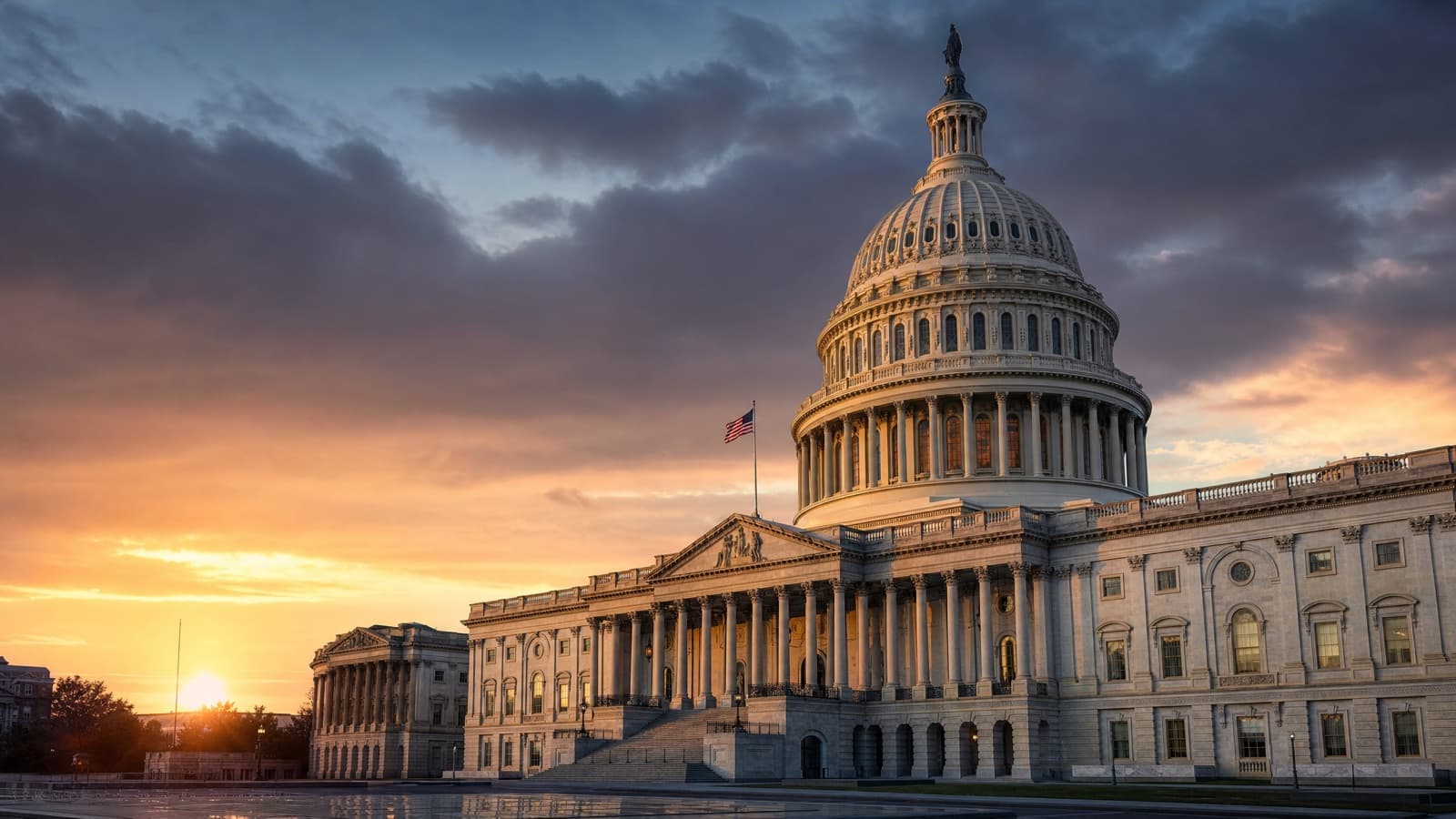
The U.S. Senate's most consequential crypto vote in years ended in defeat on September 15. The Digital Asset Market Clarity Act—H.R. 3633, known as the CLARITY Act—needed 60 votes to advance to full Senate debate. It received 50, falling ten votes short in a 49-50 procedural loss that immediately sent Bitcoin down 3%, Coinbase shares down 8%, and Circle shares down 10%, according to CNBC.
Sen. Cynthia Lummis, R-Wyo., the bill's lead architect and chair of the Senate Banking Digital Assets Subcommittee, had warned before the vote that failure would mean "it's over." After the vote, she confirmed it. The crypto industry's most ambitious legislative push in years now runs directly into a calendar wall: Congress recesses October 5, November midterms follow, and any meaningful legislative push shifts to a new Congress seated January 2027.
Yet prediction markets tell a more nuanced story than Lummis's bluntest warning. Traders are still pricing real odds of passage—just on a timeline far longer than the industry wanted.
What the Vote Actually Decided
The September 15 cloture motion was not a vote on the CLARITY Act's merits. It was a vote on whether the Senate could even begin debating H.R. 3633—a procedural hurdle requiring 60 votes, not a simple majority.
The motion failed 49 for, 50 against. Democratic senators who had spent months negotiating the bill—including Sens. Gillibrand, Warner, Booker, Warnock, Gallego, Alsobrooks, and Cortez Masto—all voted no, citing unresolved disputes over ethics provisions governing public officials' crypto holdings. Four Republicans also voted against: Sens. Collins, Hawley, Moran, and Tillis. Tillis switched his vote to no at the final moment to preserve a procedural mechanism for reconsideration.
Senate Majority Leader John Thune filed a motion to reconsider, which keeps H.R. 3633 technically alive on the Senate calendar. But technically alive and legislatively viable are two very different things.
"The failed vote likely means the crypto industry will have to wait until next year for clearer rules," CNBC reported Tuesday evening. Sen. Ruben Gallego, D-Ariz., one of the key Democratic negotiators who voted no, charged that Republicans cared "more about making sure the president keeps making money than actually bringing regulations" to the industry.
The bill itself had cleared the House 294-134 and the Senate Banking Committee 15-9. Getting it to a Senate floor vote was supposed to be the easy part.
How the Kalshi Ladder Moved
The clearest real-time read on the bill's prospects came from Kalshi's "Will the Clarity Act become law?" futures series—a ladder of contracts covering every major deadline from October 2026 through January 2028.
Before Tuesday's vote, the ladder had surged to multi-month highs. After the White House accepted new ethics language Sunday night, Kalshi's news team reported that odds of passage before January 1, 2027 jumped to 28%—up from as low as 14% the prior week—while the before-April-2027 and before-July-2027 rungs traded around 45% and 49%, respectively. The longest-dated rung, before January 1, 2028, peaked around 65 cents as traders priced in a still-plausible multi-window path.
After the vote, the ladder collapsed.
According to Kalshi's live market page, the current state of the futures series is:
| Rung (Becomes Law Before) | Current Price | Pre-Vote Peak |
|---|---|---|
| Jul 1, 2027 | 16¢ | ~54¢ |
| Oct 1, 2027 | 12¢ | ~59¢ |
| Jan 1, 2028 | 24¢ | ~65¢ |
The 2028 rung—once the optimist's anchor—fell from roughly 65 cents to 24 cents. That's not zero. But it's a market saying: this is hard, the timeline is long, and there's a real chance it doesn't happen at all.
As Kalshi's own analysis noted ahead of the vote, "the bear case is Cynthia Lummis's warning that a failure now means waiting until 2030." The market, at 24 cents for 2028, does not fully believe her.
The Congressional Calendar That Traders Are Actually Watching
Congress recesses October 5. That date matters because the current Congress—the 119th—effectively has a few working weeks left before the November midterms dominate everything.
The midterms on November 4, 2026 will determine the composition of the 120th Congress. The new Congress is seated January 3, 2027. That gap—October 5 to November 4 (pre-election) and then November 4 to January 3 (lame-duck)—is the short window traders are pricing when they put 8% odds on passage before January 2027.
The midterm elections themselves matter enormously for the CLARITY Act's prospects. Prediction markets on Kalshi and Polymarket give Democrats roughly a 55-60% chance of taking Senate control in November, according to CNBC's review of market data from September 16. If Democrats flip the Senate, the bill's dynamics change: new committee chairs, new negotiating priorities, and a crypto-skeptic faction with institutional power.
The bill's passage odds in the new Congress depend on a question markets can't fully price: how many of the seven Democratic no-votes were voting against the current version's ethics language specifically, versus voting against the concept of crypto market-structure legislation entirely?
Sen. Angela Alsobrooks, D-Md., one of those seven, argued after the vote that the bill was "not going to die"—that Congress still needs to establish clear rules for the crypto industry. Her framing suggests the no-vote was tactical, not ideological. But tactics are easier to say than to execute in a new Congress with reshuffled committee assignments and fresh electoral mandates.
The Case for 2027
Circle CEO Jeremy Allaire, speaking on CNBC the day after the defeat, offered the most optimistic read from a crypto industry insider. "We're at like the 90% mark on all of that stuff," Allaire said, referring to the substantive policy disputes over crypto exchanges, ethics provisions, and DeFi developer protections.
If Allaire is right—if the policy disagreements are truly minor and the vote failed mainly on partisan positioning ahead of midterms—then a new Congress could move faster than the current three-year slog to get H.R. 3633 this far. The bill's legislative text, 630 pages incorporating 126 substantive changes at Democratic request per Sen. Lummis's office, already reflects extensive bipartisan work. That foundation doesn't expire.
The case against: the seven Democrats who spent months negotiating and then voted no will face different political pressures in the next Congress. If Democrats win the Senate majority, they'll control the floor schedule—and may have their own bill rather than a Republican-led framework to shepherd through. The 24% Jan 2028 market price is pricing exactly this uncertainty.
The Reconsideration Clause and the Lame-Duck Window
Thune's motion to reconsider preserves one more 2026 option: the lame-duck session between the November election and the January 3 swear-in. Lame-duck Congresses have historically passed legislation that members preferred not to vote on before facing voters. It's a real but narrow path.
For the motion to proceed successfully in a lame-duck window, Majority Leader Thune would need to re-file cloture, rebuild a 60-vote coalition among senators who just told voters they voted no, and do it during the weeks when the new Congress's composition is already known. The political incentives run in different directions depending on whether the current majority is heading into minority status after January.
Prediction markets price this lame-duck scenario at roughly 8% odds of passage before January 1, 2027—a small but non-zero number that reflects a genuine possibility while acknowledging just how many things would have to go right.
Three Scenarios Prediction Markets Are Trading
Scenario 1: Lame-Duck Revival (~8% implied odds) Thune calls another cloture vote after the election. A deal on ethics emerges during the lame-duck session, possibly easier to reach when both sides no longer face voters. Passage before January 3, 2027. This requires seven new Democratic yes-votes in a compressed timeline.
Scenario 2: New Congress 2027 (the core of the Jan 2028 market) The 120th Congress convenes January 2027 with either a new Senate majority or a chastened Republican minority that saw crypto stocks fall 10% on election night. Both parties have reasons to want clarity sooner rather than later. A revised bill passes by mid-2027 under Scenario 2a (Republican Senate holds) or late 2027 under Scenario 2b (Democrats reintroduce their own version). The 24% Jan 2028 price is pricing the combined weight of these paths.
Scenario 3: Regulatory Path Without Legislation CNBC noted that regulators are already moving. The SEC has proposed allowing startups to sell up to $75 million of tokens without registering; the CFTC recently approved the first bitcoin perpetual futures in the U.S. Without legislation, agencies expand their rulebooks incrementally. The industry gets de facto clarity even without statutory clarity. This scenario—crypto regulation by rulemaking rather than Congress—is the implied complement to Scenarios 1 and 2 that markets discount into the current 76¢ no-by-2028 price.
What's at Stake Beyond Crypto
The CLARITY Act's significance for prediction markets specifically is less about the bill's crypto provisions and more about one clause: the confirmation that CFTC jurisdiction over prediction market contracts remains intact.
Lummis's office noted in releasing the final text that the bill's DeFi provisions "only apply to spot and cash digital commodity transactions"—language added specifically to address tribal gaming concerns about prediction markets. The bill's passage would have codified, at the statutory level, that CFTC-registered prediction market exchanges operate under federal law, not state gaming statutes.
Without the CLARITY Act, that question continues to be litigated state by state, court by court. The eight federal cases currently active involving Kalshi and Polymarket—plus the Ninth Circuit's recent IGRA ruling—would continue to define the legal landscape through case law rather than statute.
Markets are trading the CLARITY Act's 2027 prospects. But for prediction market participants, the bigger bet is on whether the legislative or judicial path to federal preemption moves faster.
FAQ
What is the CLARITY Act? The Digital Asset Market Clarity Act (H.R. 3633) is comprehensive federal legislation that would establish a regulatory framework for digital assets, divide oversight between the SEC and CFTC, set registration requirements for crypto platforms, and strengthen anti-money-laundering protections. The House passed it 294-134; the Senate Banking Committee cleared it 15-9; the full Senate failed to advance it to debate on September 15, 2026.
Why did the CLARITY Act fail? The Senate's cloture vote failed 49-50, far short of the 60-vote threshold needed to end debate and advance the bill. Democratic senators who participated in over a year of bipartisan negotiations voted no, citing unresolved disputes over ethics provisions governing President Trump and other officials' crypto holdings. Four Republicans also voted no, including Sen. Josh Hawley and Sen. Susan Collins.
Can the CLARITY Act still pass in 2027? Yes. The Senate's motion to reconsider preserves a procedural path. Kalshi's futures market prices a 24% chance of passage before January 1, 2028, reflecting meaningful—if not majority—odds of legislative action after the midterms. Circle CEO Jeremy Allaire told CNBC that negotiators were "90% there" on the substantive policy disputes.
What happens to crypto regulation without the CLARITY Act? The SEC and CFTC continue to regulate through existing authority and new rulemaking. The SEC has proposed a token offering exemption; the CFTC approved bitcoin perpetual futures in 2026. State-by-state litigation over prediction markets and other crypto products continues. The industry gets regulatory clarity incrementally, not comprehensively.
Where can I track the CLARITY Act's odds? Kalshi's "Will the Clarity Act become law?" market series tracks passage odds across multiple deadline rungs, from the near-term to January 2028. Polymarket's CLARITY Act event contract tracks 2026 passage odds. Both markets offer real-time crowd-sourced probability estimates.
Conclusion
The CLARITY Act's Senate failure is a major setback, not a permanent end. Prediction markets—the same markets that tracked this bill's odds through a year of negotiations—are pricing a 24% chance of passage by January 2028. That's not optimism. That's a real bet on a specific path: midterms → new Congress → revised deal → law.
Whether 2027 delivers that deal depends on the same factors that sank the 2026 version: ethics provisions, Democratic Senate control, and whether the industry's optimism about being "90% there" on policy translates into actual floor votes.
Traders have their bets in. The next update comes on Election Night.
Sources & Verification
- Senate cloture vote on Clarity Act fails, dealing regulatory blow to crypto industry — CNBC, September 15, 2026
- Lummis, Boozman, Scott Release Final Clarity Act Text — Sen. Lummis official press release, September 14, 2026
- Lummis Releases Updated Clarity Act Text Ahead of Historic Tuesday Vote — Sen. Lummis official press release, September 10, 2026
- Will the Clarity Act become law? Odds & Predictions — Kalshi market page, live odds
- Clarity Act odds: Senate crypto bill nears key vote — Kalshi News, September 14, 2026
- Circle CEO Says CLARITY Talks Are '90%' There — Yahoo Finance / CNBC, September 16, 2026