
The CFTC Is Fighting Its Own Circuit: New SDNY Filing and a Third Insider Trading Case
CFTC filed in SDNY arguing the Ninth Circuit erred on swap definition, and announced a third insider trading case. What it means for prediction markets.
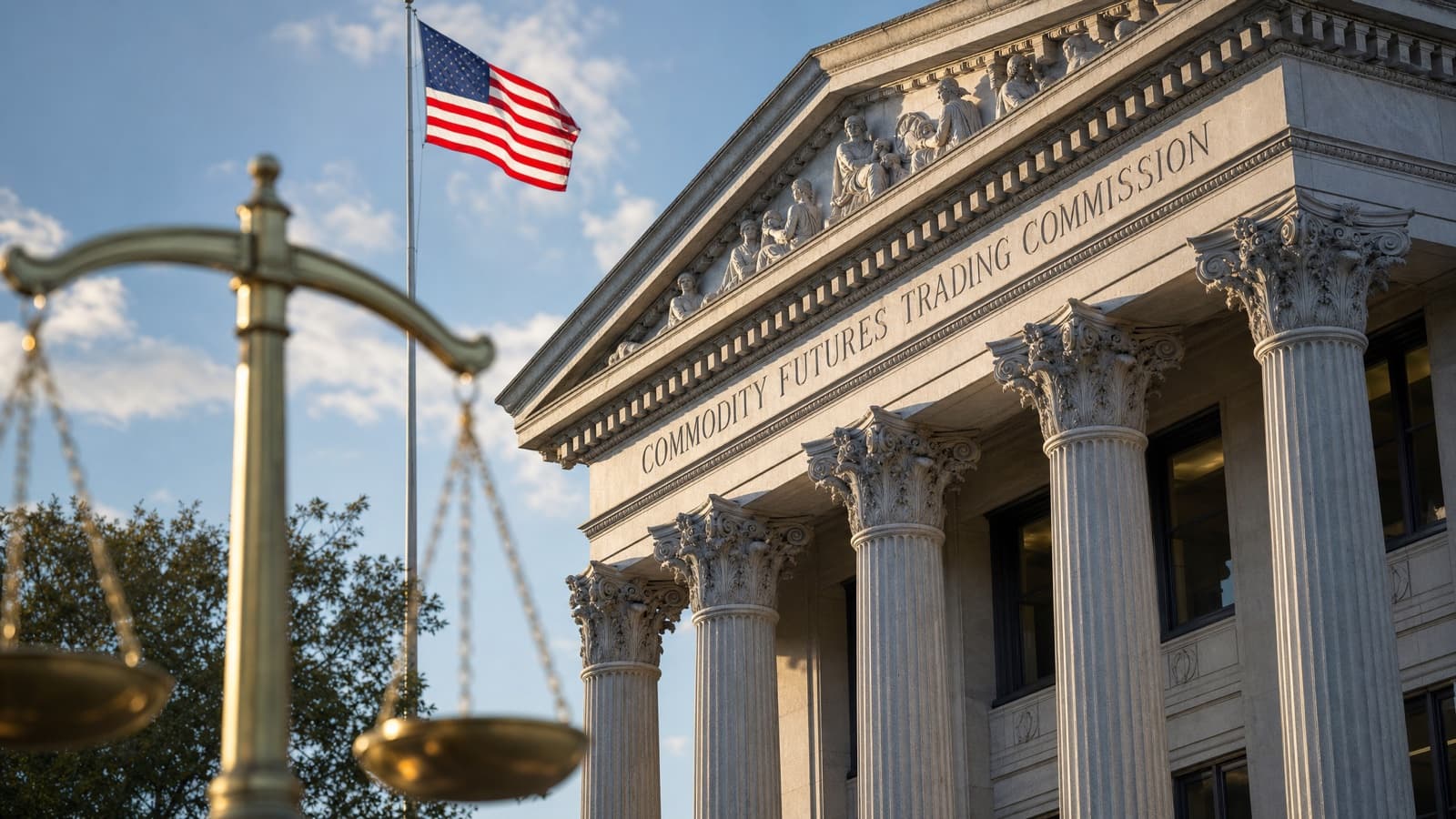
On Labor Day 2026, the Commodity Futures Trading Commission did something federal agencies almost never do: it walked into a different federal courthouse and argued that another appeals court got the law wrong. Specifically, the CFTC filed arguments in the Southern District of New York telling the court that the Ninth Circuit's August 28 ruling — which held that sports event contracts are not "swaps" under the Commodity Exchange Act — was legally incorrect.
The same morning, the CFTC and the U.S. Attorney's Office for the Southern District of New York announced a third parallel insider trading enforcement action involving prediction market event contracts and the misuse of government information.
Together, these two moves reveal a coordinated legal offensive. The CFTC is not accepting the Ninth Circuit's ruling. It is methodically building the case for Supreme Court review — and enforcing insider trading laws against prediction market participants at the same time.
Background: The 9th Circuit's August Blow
On August 28, 2026, a unanimous three-judge panel of the U.S. Court of Appeals for the Ninth Circuit issued its decision in KalshiEx, LLC v. Assad. The court ruled that sports event contracts offered on prediction market exchanges are not "swaps" under the Commodity Exchange Act, and therefore are not subject to the CFTC's exclusive jurisdiction.
The CFTC's position had been that all event contracts — including sports contracts — qualify as swaps under CEA Section 1a(47), because they are agreements "dependent on the occurrence, nonoccurrence, or the extent of the occurrence of an event or contingency associated with a potential financial, economic, or commercial consequence." The Ninth Circuit rejected that reading.
"The sports event contracts were not 'swaps' because they were sports bets," the court wrote. The panel found three independent reasons why sports event contracts fail the statutory definition: an "event" is not the same as the "outcome" of an event; sports contracts do not serve the risk-transfer function that swaps do; and Kalshi's broad interpretation would make virtually any commercial transaction a swap.
In a statement to CNBC, the CFTC fired back immediately: "The Ninth Circuit erred today when it invented a new and atextual exception to the CEA. A derivative contract structured as a swap is a swap regardless of the underlying subject matter — the only exceptions in statute are onions and movie box office receipts."
The practical consequence of the ruling: states in the Ninth Circuit — including California, Nevada, Oregon, and Washington — now have a legal basis to enforce their own gambling laws against prediction market platforms for sports contracts.
The Circuit Split: Two Courts, Two Answers
The Ninth Circuit's ruling directly conflicts with the Third Circuit's April 2026 decision in KalshiEx, LLC v. Flaherty. In that 2-1 ruling, the Third Circuit held that sports event contracts traded on a designated contract market are swaps subject to the CFTC's exclusive jurisdiction, and that the CEA preempts state gambling laws as applied to those contracts.
The disagreement between the two circuits is not technical — it is fundamental. The Third Circuit held that the term "event" in the swap definition could encompass the outcome of a sporting event, reasoning that such outcomes carry financial, economic, or commercial consequences for sponsors, advertisers, and franchise owners. The Ninth Circuit rejected this directly, holding that an "event" occurring is categorically different from a team winning.
This circuit split creates a fragmented legal landscape for prediction market platforms and their users. In New Jersey, Pennsylvania, and Delaware — Third Circuit states — sports prediction markets have a federal shield argument. In California, Nevada, Arizona, Oregon, and Washington — Ninth Circuit states — state gambling laws apply in full force. Everywhere else, the question remains unsettled.
That fragmented map is precisely what makes Supreme Court review likely. When two appeals courts produce flatly contradictory answers on the same federal statute, the Supreme Court's role is to resolve the conflict.
The CFTC's Countermove: Filing in New York
The Ninth Circuit's ruling was handed down August 28. Nine days later, on September 7, the CFTC filed arguments in the Southern District of New York — in the Second Circuit's jurisdiction — arguing that the Ninth Circuit's analysis was wrong.
This move is legally strategic. The CFTC cannot appeal its own circuit's ruling to another circuit (courts don't work that way), but it can advance arguments in active litigation in a different circuit and try to build a conflicting Second Circuit ruling. The SDNY handles major commodity and securities enforcement actions and has decades of precedent on the scope of the Commodity Exchange Act. A Second Circuit ruling disagreeing with the Ninth Circuit on the swap definition would add a third appellate voice to the debate — and make Supreme Court cert essentially inevitable.
According to court records, the CFTC argued in its SDNY filing that the Ninth Circuit "improperly excluded event contracts from the Commodity Exchange Act's definition of a swap." The CFTC's public position, maintained consistently in its proposed June 2026 rulemaking published in the Federal Register, is that event contracts "may fall within the definition of 'swap'" and that sports event contracts in particular meet the statutory definition because they provide for payment "dependent on the occurrence, nonoccurrence, or extent of the occurrence of an event or contingency associated with a potential financial, economic, or commercial consequence."
The timing is not accidental. The en banc rehearing window for Assad closes around September 11. A SCOTUS cert petition is expected to follow within months.
Three Cases, One Message: Prediction Markets Are Regulated Derivatives
The same day as the SDNY circuit filing, the CFTC and SDNY announced a third parallel enforcement action involving prediction market insider trading.
To understand why this matters, the timeline of enforcement is instructive.
Case 1 — April 23, 2026: SDNY and the CFTC brought parallel criminal and civil charges against Gannon Ken Van Dyke, an active-duty U.S. Army Special Forces master sergeant. According to the indictment, Van Dyke participated in planning "Operation Absolute Resolve" — the U.S. military operation to capture Venezuelan President Nicolás Maduro — and used classified information from that operation to purchase event contracts on Polymarket's offshore platform. He allegedly profited more than $404,000. The CFTC called it the first time the agency had charged insider trading involving event contracts, and the first use of the so-called "Eddie Murphy Rule" (CEA Sections 4c(a)(3) and 4c(a)(4)(C)), which prohibits trading on misappropriated nonpublic government information in commodities markets.
SDNY U.S. Attorney Jay Clayton stated: "Prediction markets are not a haven for using misappropriated confidential or classified information for personal gain."
Case 2 — May 27, 2026: A second parallel action targeted Michele Spagnuolo, a Google software engineer based in Switzerland. According to charges, Spagnuolo misappropriated confidential data from Google's internal "Year in Search 2025" project and used it to place trades on a decentralized prediction market platform, allegedly earning approximately $1.2 million in profits. The case extended the theory beyond government information to confidential corporate information — a significant expansion of the legal framework.
Case 3 — September 7, 2026: A third enforcement action was filed today, again involving misuse of government information in prediction market event contracts. Details of this case are expected to become public through court records.
CFTC Director of Enforcement David Miller has stated explicitly that the belief that insider trading rules do not apply to prediction markets is a "myth" — and that enforcing insider trading laws in prediction markets is a top priority. As the CFTC's own public guidance states: "Event contracts are typically structured as swaps. Like other derivatives, swaps are financial contracts that derive their value from an underlying commodity."
The insider trading enforcement campaign reinforces the CFTC's core jurisdictional argument at every turn: if insider trading law applies to prediction market trades, those trades must be swaps. The enforcement posture and the legal argument are the same argument made two different ways.
What This Means for Platforms and Traders
For prediction market platforms operating in the United States, the current legal environment is the most complex it has ever been.
Kalshi is a CFTC-designated contract market operating nationally but now subject to state-level enforcement in Ninth Circuit jurisdictions. Washington state has already imposed restrictions; Nevada's attorney general celebrated the ruling as a "major victory."
Polymarket's U.S. operation (QCX LLC d/b/a Polymarket US) is sports-only and CFTC-regulated, with its own exposure to the same legal questions. Polymarket's offshore global platform — where the Van Dyke and Spagnuolo trades occurred — is not accessible to U.S. users under CFTC authorization.
For traders, the practical takeaway from the insider trading enforcement campaign is straightforward: anyone who has access to nonpublic information — government, corporate, or otherwise — and who uses it to place prediction market trades faces the same legal exposure as if they had traded stocks or futures on that information.
Frequently Asked Questions
What is a "swap" under the Commodity Exchange Act? A swap is broadly defined in the CEA to include any agreement, contract, or transaction that provides for payment "dependent on the occurrence, nonoccurrence, or the extent of the occurrence of an event or contingency associated with a potential financial, economic, or commercial consequence." The dispute between courts centers on whether sports outcomes meet this definition.
Why does it matter whether sports contracts are swaps? If sports event contracts are swaps, they fall under the CFTC's exclusive federal jurisdiction, and state gambling laws cannot regulate them. If they're not swaps, each state has authority to treat them as gambling and restrict or prohibit them.
What is the "Eddie Murphy Rule"? The "Eddie Murphy Rule" refers to CEA Sections 4c(a)(3) and 4c(a)(4)(C), added by the Dodd-Frank Act, which prohibit federal government employees from trading on nonpublic government information in commodities markets. The name is a pop-culture reference to the 1983 film Trading Places. The Van Dyke case marked its first-ever use in prediction market enforcement.
The Bigger Picture
On a federal holiday, the CFTC chose to advance its two most important legal arguments simultaneously: that prediction market contracts are swaps the federal government has exclusive authority to regulate, and that insider trading laws apply fully to anyone who trades them.
The Ninth Circuit handed the industry a setback. The CFTC responded by filing in New York and opening a third criminal case on the same day.
The legal battle over who governs prediction markets in the United States is not slowing down. It is accelerating.
Sources & Verification
- Ninth Circuit rules against prediction markets (KalshiEx v. Assad), Aug. 28, 2026 — CNBC, verified Sept. 7, 2026
- Appeals court affirms state power over prediction market platforms — The Hill, Aug. 28, 2026
- Ninth Circuit legal analysis: sports event contracts not swaps under CEA — National Law Review, Sept. 1, 2026
- U.S. Soldier Charged With Using Classified Information To Profit From Prediction Market Bets — U.S. Department of Justice, April 23, 2026
- CFTC Prediction Markets; Public Interest Determinations (NPRM) — Federal Register, June 12, 2026
- Understanding Prediction Markets and Event Contracts — CFTC.gov, updated September 2026