
The CFTC's 267-Page Prediction Market Rulebook Closes for Comment Tomorrow
The CFTC's June 10 rulemaking on event contracts closes for public comment July 27. Here's what the proposed public-interest framework means for sports markets, your trades, and the ongoing state battles.
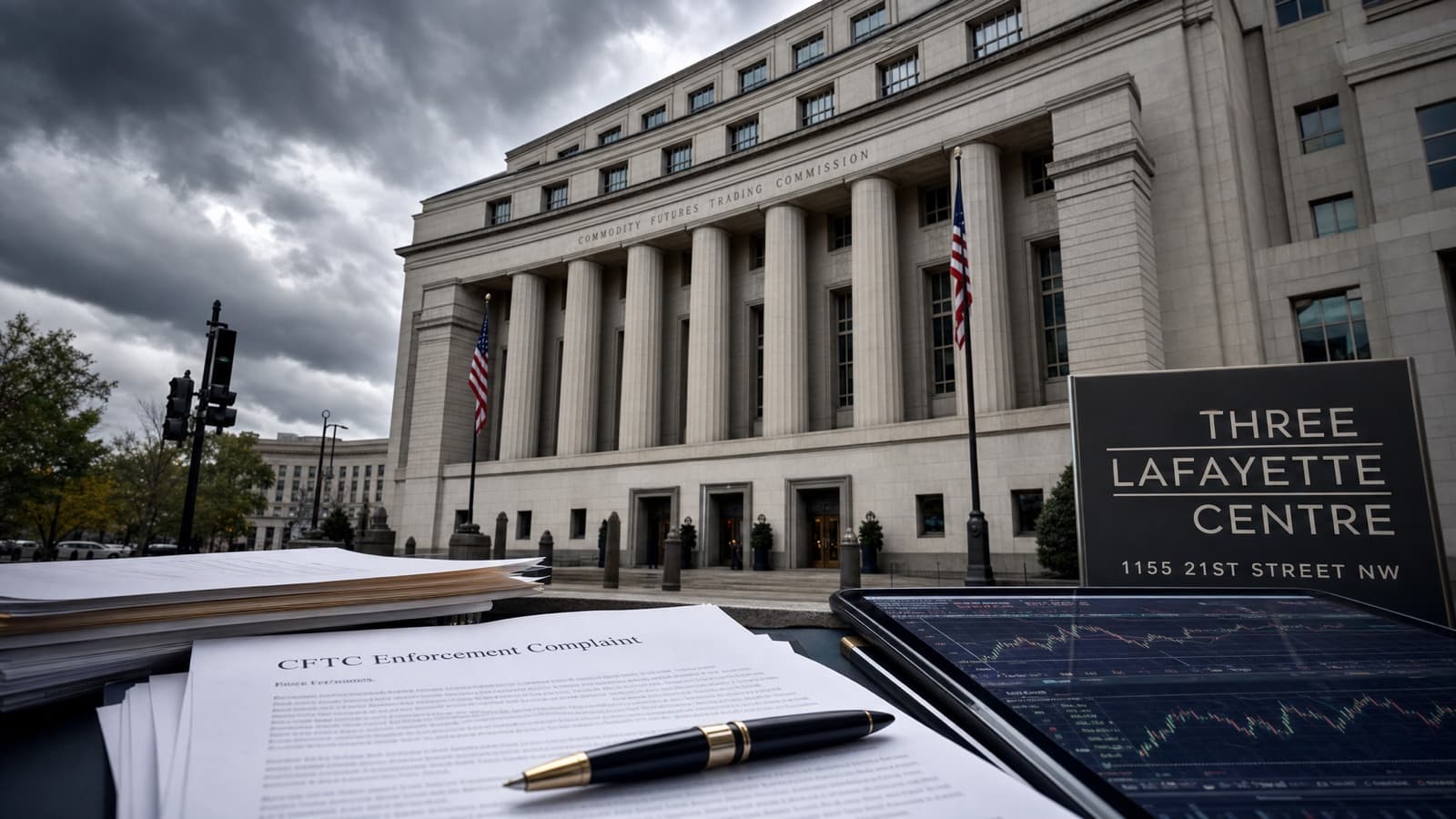
The 45-day window for shaping how the Commodity Futures Trading Commission regulates prediction markets closes Monday, July 27. If you trade on Kalshi, Polymarket, or any CFTC-registered platform, the 267-page rulemaking that closes tomorrow will set the legal architecture that determines which markets you can trade — and which the agency can block.
Here is what the proposed rule does, which contracts are most at risk, and what happens next.
What the CFTC Proposed on June 10
On June 10, 2026, the CFTC issued a Notice of Proposed Rulemaking (NPRM) titled "Prediction Markets; Public Interest Determinations." Published in the Federal Register on June 12, the proposal would amend CFTC Regulation 40.11 and add a new Appendix F to Part 40 — the agency's core rules governing how exchanges self-certify new contracts.
The NPRM responds directly to the explosive growth of prediction markets: the agency's own proposal notes that trading volume across CFTC-registered platforms exceeded $25 billion in 2025 alone. Kalshi alone posted more than $31 billion in volume during June 2026, driven largely by FIFA World Cup contracts, according to Dune Analytics data cited by CNBC.
The proposal does not ban prediction markets. What it does is build a clearer legal framework for when the CFTC can block a contract from being listed — and what factors it will weigh in making that call.
The Three-Step Framework
The current CFTC rule is blunt: certain event contracts "involving" five Enumerated Activities may be prohibited if they are "contrary to the public interest." The categories are gaming, unlawful conduct, terrorism, assassination, and war.
The problem, as the NPRM acknowledges, is that "involving" has never been clearly defined. Platforms have operated for years without knowing exactly which contracts would trigger review.
The proposed rule establishes a three-step inquiry:
Step 1 — Is it an event contract? The contract must settle on "an occurrence, extent of an occurrence, or contingency" — a defined term in the Commodity Exchange Act. Standard financial derivatives are not event contracts and are not subject to this review.
Step 2 — Does it "involve" an Enumerated Activity? This is where the rule makes its most important change. Under the proposal, a contract "involves" an enumerated activity only if its settlement is directly determined by an occurrence within that activity. The existing broader "involves, relates to, or references" standard would be replaced with a tighter, causation-based test.
Step 3 — Is it contrary to the public interest? Only if the CFTC reaches this step does it weigh a set of multifactor criteria. Factors include market integrity, manipulation risk, information value, settlement objectivity, and whether established integrity frameworks (such as professional sports league standards) are in place.
If the CFTC does not issue a prohibition order within 90 days of a contract's listing — or within any agreed extension, up to 100 days total — the contract is deemed approved. The agency must initiate any review within 10 business days of self-certification.
Which Contracts Are Safe — and Which Are at Risk
The proposed rule provides explicit guidance on the gaming category, which directly covers sports prediction markets.
Likely to be permitted:
- Contracts settling on aggregate outcomes — game winners, tournament champions, season standings, statistical leaders — supported by objective data from established leagues with integrity monitoring programs
- Markets tied to macroeconomic data, political election results, and scientific or policy events
Likely to face CFTC review or prohibition:
- Contracts settling on discrete player or team actions (individual at-bats, specific plays, single possessions)
- Contracts tied to player injuries or health status
- Contracts tied to officiating decisions (referee calls, replay rulings)
- Contracts tied to physical altercations during competition
- Markets tied to youth sports at any level
- Contracts where settlement depends on national security matters, random occurrences, or events with limited integrity monitoring
The good news for traders on the major platforms: the contracts you're most likely to trade — "Who wins the Super Bowl," "Which team wins the NBA championship," "Will Argentina win the World Cup" — sit squarely in the likely-permitted category under the framework. The risk zone is the more granular, prop-style contracts that settle on narrow individual actions.
Why This Rule Exists Now
The NPRM arrives after two years of escalating legal conflict between the CFTC and state governments. The agency has filed federal lawsuits against at least nine states — including New Mexico (June 12, 2026), Arizona, Connecticut, Illinois, Minnesota, New York, Rhode Island, Wisconsin, and Kentucky — seeking to block state enforcement actions against CFTC-registered prediction market exchanges.
The core dispute: states argue sports event contracts are gambling, subject to state police powers. The CFTC argues they are federally regulated derivatives, subject to exclusive CFTC jurisdiction under the Commodity Exchange Act.
A clearer public-interest framework strengthens the CFTC's legal position in that fight. By codifying exactly what kinds of contracts it will and won't permit — and establishing a formal 90-day review clock — the agency is signaling to courts that it has a structured regulatory system, not just an ad-hoc claim of jurisdiction.
This matters because Minnesota enacted a law on May 18, 2026, making prediction market operation a state felony effective August 1. The CFTC sued Minnesota within 24 hours. A preliminary injunction ruling is pending in that case.
The proposed rule was issued by Chairman Michael Selig — currently the only seated CFTC commissioner, with all four non-chair seats vacant since 2025. Legal observers have noted that a final rule issued by a single commissioner without the quorum that administrative law normally requires could face its own procedural challenges in court, separate from the underlying substantive dispute.
Reaction: Industry and Opponents
The American Gaming Association, which represents U.S. casinos and has been among the most vocal opponents of prediction markets, called the NPRM "a remarkable attempt to redefine what constitutes sports betting." The AGA has argued that prediction markets displace state-regulated sports betting tax revenues — a figure the group estimates at more than $1 billion annually — without subjecting themselves to the same consumer protection and integrity requirements.
Mick Mulvaney, former White House budget director and executive director of the advocacy group Gambling Is Not Investing, was more direct: "Congress never intended for federal derivatives law to become a backdoor for unsafe sports gambling. The CFTC has no rightful role as a national gaming regulator."
Platform operators and their supporters have taken the opposite view: that prediction markets are genuinely distinct financial products, that the CFTC has always had jurisdiction over event contracts, and that the NPRM is a reasonable effort to provide the regulatory clarity the industry has long needed.
The CLARITY Act — pending legislation in Congress that would either explicitly legitimize or ban sports event contracts, depending on its final form — operates in parallel. Its current draft includes a tribal gaming amendment that could result in a sports ban, and its outcome is deeply uncertain. The NPRM is the CFTC's attempt to move the regulatory framework forward regardless of what Congress does.
Live market view — track the stakes:
Live market view — will a sports ban become law?
The 90-Day Review Process in Practice
Once the final rule takes effect — 60 days after Federal Register publication of the final version — the 90-day review clock becomes the dominant operational reality for platform contract designers.
Under the proposed framework:
- A platform self-certifies a new contract
- The CFTC has 10 business days to decide whether to open a review
- If it opens a review, it has 90 days (extendable by agreement, capped at 100 days) to issue a prohibition order
- If no order issues, the contract is deemed approved and trading continues
This "deemed approved" mechanism is significant. It means the default outcome is permission, not prohibition. The burden is on the CFTC to act, not on platforms to prove safety before listing.
How to Comment Before Tomorrow's Deadline
The CFTC's comment portal closes at midnight Eastern time on Monday, July 27, 2026. Comments can be submitted at:
regulations.gov — CFTC NPRM on Prediction Markets Public Interest Determinations
The agency has invited comment on all aspects of the proposal, specifically including:
- The appropriate scope of the "gaming" definition
- How the "involves" standard should apply in practice
- The multifactor public interest analysis
- Costs and benefits of the proposed approach
- Alternative frameworks to individualized review
Both individual traders and institutional participants can comment. Law firm analyses from WilmerHale, Skadden, Dechert, and Akin Gump have all recommended that market participants submit comments, describing this as the most consequential CFTC rulemaking on event contracts since the agency first approved Kalshi as a designated contract market in November 2020.
FAQ
Does this rule ban sports prediction markets? No. The NPRM explicitly does not ban sports prediction markets. It establishes a framework for which specific types of sports contracts may face CFTC review. Aggregate-outcome markets — game results, championship winners — are likely to be permitted under the proposal.
Which platforms are affected? All CFTC-registered designated contract markets that list event contracts. That currently includes Kalshi, which holds both DCM and DCO designation, and any other CFTC-registered platform offering similar products. Platforms operating outside CFTC registration would be subject to enforcement action regardless of this rule.
What happens if I'm already trading a contract when the rule takes effect? The rule addresses new contract listings and the review process going forward. It does not unwind existing approved contracts. However, contract categories that fall into the "likely prohibited" zone — player injury markets, officiating-decision markets — could face non-renewal when platforms cycle through their contract calendars.
When does the final rule take effect? If finalized after the comment period, the final rule would take effect 60 days after Federal Register publication. Given the volume of comments expected and the potential legal challenges to a single-commissioner final rule, the timeline is uncertain. The CFTC has signaled it wants to move quickly.
Is this connected to the Minnesota ban? Indirectly. The Minnesota felony law and the federal NPRM are separate tracks. The NPRM strengthens the CFTC's federal preemption argument in the Minnesota case and others. But the preliminary injunction request in Minnesota will be decided on Commodity Exchange Act grounds, not on whether the NPRM has finalized.
Conclusion
The CFTC's June 10 rulemaking is the most significant federal action on prediction markets since the agency first designated Kalshi as a contract market in 2020. Tomorrow's comment deadline is the last chance for traders, platforms, academics, and opponents to shape the final version of a rule that will govern which markets Americans can legally trade on federally regulated exchanges.
The framework the NPRM proposes is, on balance, favorable to the prediction market industry as it currently operates: aggregate-outcome sports markets appear safe, the 90-day default-approval clock creates a presumption of permission, and the new "involves" standard narrows the threshold for CFTC review. But the rule's final form — and whether it survives the legal challenges a single-commissioner rulemaking may invite — remains an open question.
Track the downstream market impact in real time at PredictionMarkets.US.
Sources & Verification
- CFTC NPRM "Prediction Markets; Public Interest Determinations" issued June 10, 2026, published in the Federal Register June 12, 2026: CFTC.gov Proposed Rules
- Comment portal: Regulations.gov CFTC docket
- CFTC lawsuit against New Mexico, June 12, 2026: CFTC Press Release 9251-26
- CFTC stays KalshiEX rule change, July 14, 2026: CFTC Press Release 9267-26
- Three-step inquiry and "involve" standard analysis: Skadden Arps client alert, June 2026
- 10 Takeaways from the NPRM, including Appendix F and 90-day review: WilmerHale client alert, June 2026
- Enumerated Activities and contract risk tiers: Dechert OnPoint, June 2026
- $25B+ 2025 trading volume, per CFTC NPRM: Mayer Brown client alert, June 2026
- Kalshi $31B June 2026 volume: Dune Analytics data, CNBC, July 4, 2026
- AGA and Mulvaney quotes, quorum concerns: TechTimes, July 5, 2026
- Public interest factors, gaming definition scope: Akin Gump client alert, June 2026
- Katten analysis of 90-day review and "deemed concluded" mechanism: Katten client alert, June 2026