
The Federal Government vs. New York: What's at Stake in Today's Prediction Market Court Hearing
The CFTC is asking a Manhattan judge to block New York's enforcement against prediction markets. What today's SDNY hearing means for traders and platforms.
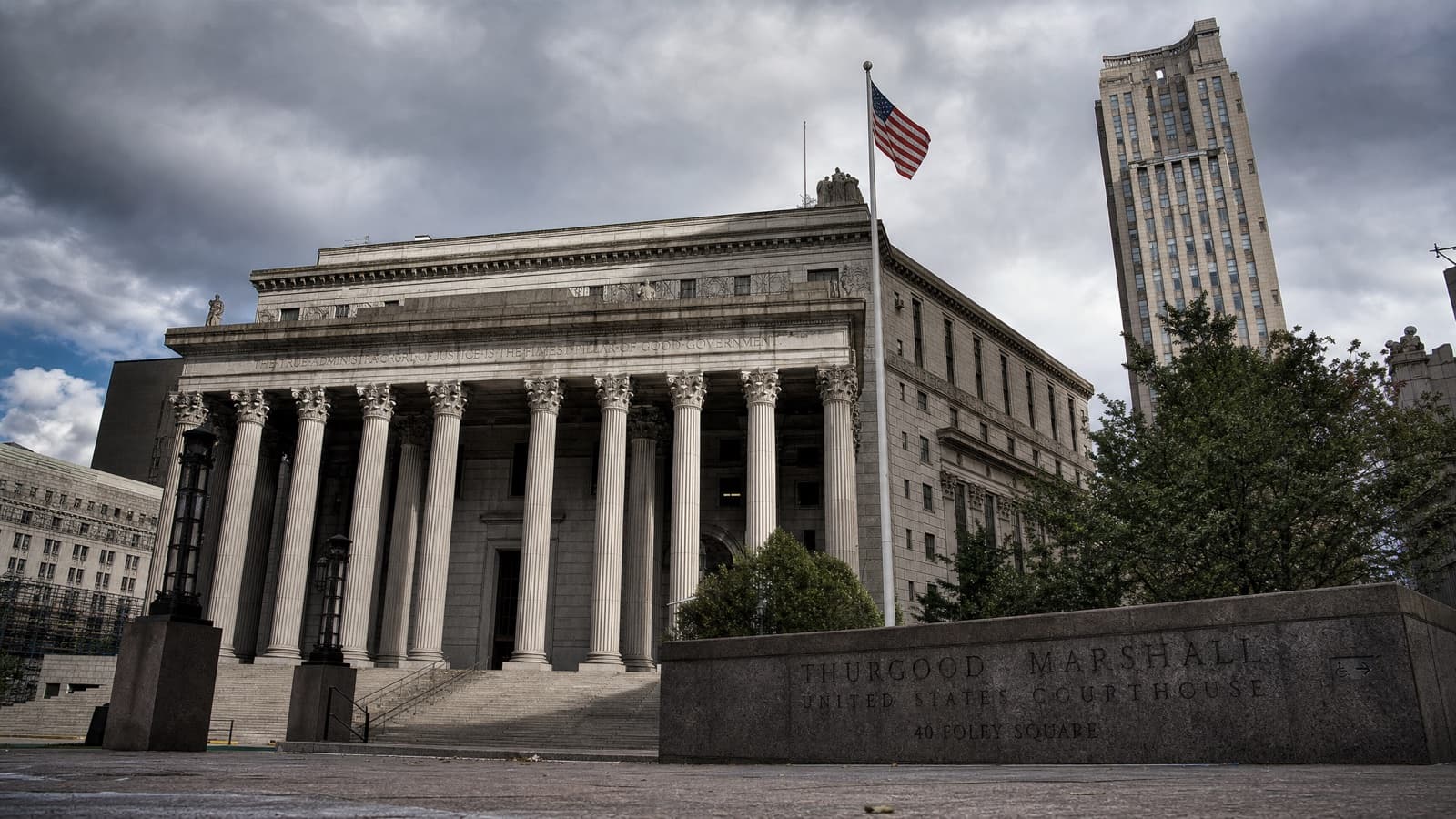
This morning at 11 a.m. ET, attorneys for the United States government and the Commodity Futures Trading Commission argued one of the most consequential questions in American financial regulation before U.S. District Judge Lorna G. Schofield in lower Manhattan: Can a state apply its gambling laws to prediction markets that are federally regulated as derivatives exchanges?
A ruling on the CFTC's request for a preliminary injunction could determine whether New York can continue pressing its enforcement campaign against Kalshi, Coinbase, and Gemini while the federal lawsuit moves forward — or whether a federal court will throw up a temporary shield. Either way, the outcome of today's hearing will shape the regulatory landscape for every prediction market platform operating in the United States.
What the CFTC Is Asking For
On April 24, 2026, the Commodity Futures Trading Commission filed a lawsuit against the State of New York in the Southern District of New York (Case No. 1:26-cv-03404-LGS), seeking two forms of relief: a declaratory judgment that federal law grants the CFTC exclusive authority to regulate event contracts, and a preliminary injunction blocking New York from enforcing its gambling statutes against CFTC-registered exchanges.
"CFTC-registered exchanges have faced an onslaught of state lawsuits seeking to limit Americans' access to event contracts and undermine the CFTC's sole regulatory jurisdiction over prediction markets," CFTC Chairman Michael S. Selig said when the suit was filed. "New York is the latest state to ignore federal law and decades of precedent by seeking to enforce state gambling laws against CFTC-registered exchanges."
The CFTC's legal theory rests on the Commodity Exchange Act (CEA), which grants the agency exclusive jurisdiction over swaps and futures contracts traded on federally licensed exchanges. When a state attempts to regulate or shut down those products through gambling law, the CFTC argues, federal law preempts the state's authority. As the complaint stated, eight CFTC-registered designated contract markets had collectively self-certified more than 3,000 event contracts by the time the suit was filed.
Today's hearing addresses the preliminary injunction request — temporary relief while the case continues. It is not a final ruling on who is right about federal preemption. But its practical effects could be immediate and substantial.
How the New York Fight Escalated
The dispute began in October 2025, when the New York State Gaming Commission sent Kalshi a cease-and-desist letter demanding the exchange stop offering sports wagering without a state license. Kalshi, which holds a Designated Contract Market license from the CFTC and is headquartered in New York, had been self-certifying sports-event contracts since January 2025.
The CFTC responded with its April 24 lawsuit after New York's enforcement spread beyond Kalshi. On April 21, 2026, New York Attorney General Letitia James filed civil enforcement actions against Coinbase Financial Markets, Inc. and Gemini Titan, LLC, alleging unlicensed gambling in violation of New York Racing Law Section 1367 and New York Penal Law Section 225.20. The Attorney General sought permanent injunctions, restitution, penalties, and damages against both entities.
The confrontation escalated sharply on July 31, when the Attorney General filed a state court complaint seeking a temporary restraining order that would prohibit Kalshi from offering all event contracts "within or from New York." The scope was sweeping. Because Kalshi is headquartered in New York, a prohibition on offering contracts "within or from" the state would effectively shut down Kalshi's entire national operations. New York sought more than $36 billion in compensatory damages at minimum, excluding punitive damages — against a company whose publicly reported valuation is $22 billion.
The CFTC invoked its emergency authority under Section 8a(9) of the Commodity Exchange Act on August 11. In the Market Emergency Declaration Order, the Commission found that New York's enforcement action and TRO motion constituted a "major market disruption which prevents the market from accurately reflecting the forces of supply and demand" with respect to event contracts. The order directed Kalshi to continue performing its designated contract market functions.
"New York intends to make event contract derivatives waste away under its iron curtain of state gaming laws before the courts get the chance to issue final rulings," Chairman Selig said at the time. "Congress did not intend for derivatives exchanges to be regulated under a patchwork of state gaming laws."
The emergency order further warned that the logical implications of New York's position extended beyond prediction markets: "If New York can ban event contracts, it logically could ban any derivatives product that the Commission regulates, including basic futures contracts, on the erroneous basis that trading in these products contravenes New York's gambling laws."
Two Sides, One Core Question
The legal arguments have hardened through months of litigation into two clearly opposing positions.
The CFTC argues that Congress enacted the CEA specifically to create a uniform national derivatives market, preempting conflicting state law. A single state cannot serve as the de facto regulator of federally licensed exchanges. Kalshi's New York headquarters makes this point especially acute: a ban on offering contracts "within or from" New York would, in the agency's words, make "a single State effectively become the nationwide regulator of event-contract swaps on designated contract markets — the antithesis of the structure that Congress designed for federal derivatives regulation."
The CFTC also argued that allowing states to use gambling laws against derivatives exchanges would introduce a "risk premium" into prices based on geography rather than the underlying events, distorting the price discovery function that the CEA was designed to protect.
New York argues that federal registration as a derivatives exchange does not strip the state of its traditional authority to regulate gambling. Sports-event contracts — which allow users to trade on whether a team wins, covers a point spread, or finishes above a scoring threshold — are gambling products in substance regardless of the regulatory label. Congress, New York contends, did not intend the CEA to immunize sports wagering from state consumer-protection law.
The American Gaming Association filed a memorandum in the case on September 7 opposing the CFTC's preliminary injunction request. Judge Schofield permitted the filing while leaving the trade group's intervention request undecided. The AGA argued that prediction markets "offer sports betting" and that granting CFTC preemption would undermine the state-regulated framework that has governed legal sportsbooks since the Supreme Court's Murphy v. NCAA decision in 2018 opened sports betting to the states. The AGA also cited the Ninth Circuit's recent ruling as support for New York's authority to treat sports-event contracts as gambling.
The Circuit Split Shaping This Hearing
Judge Schofield's decision arrives amid a deepening and consequential divide among federal appeals courts.
The Third Circuit Court of Appeals sided with prediction markets, affirming a preliminary injunction against New Jersey's enforcement efforts. The court concluded that the Commodity Exchange Act likely preempts state gambling enforcement against CFTC-registered exchanges offering sports-event contracts.
The Ninth Circuit took the opposite view. In KalshiEX LLC v. Assad, decided August 28, a unanimous three-judge panel ruled that Nevada could regulate Kalshi's sports contracts as gambling. The Ninth Circuit applied the major-questions doctrine, finding that treating sports-event contracts as swaps would represent an expansion of agency power that Congress did not clearly authorize. Kalshi filed a petition for en banc reconsideration on September 9, arguing the three-judge panel's decision "creates a circuit split on an exceptionally important question of federal preemption."
A separate SDNY judge also weighed in. U.S. District Judge Analisa Torres denied Kalshi's own preliminary injunction request against New York regulators in a 22-page opinion on July 7. Judge Torres found that Kalshi had not demonstrated it was likely to prevail on the preemption argument, concluding that New York gambling laws "complement rather than conflict with federal law." That ruling arose from Kalshi's own private lawsuit; today's proceeding is the CFTC's lawsuit, with the United States government as the plaintiff — a different posture that gives the CFTC's preemption theory additional weight.
Kalshi's appeal in the Second Circuit (No. 26-1835) is also pending, with the CFTC having filed an amicus brief supporting the platform's position.
What the Outcome Could Mean
A preliminary injunction in the CFTC's favor would restrain New York from continuing or expanding enforcement against Kalshi, Coinbase, and Gemini while the federal case proceeds. For traders, it would mean continued access to those platforms in New York without the risk of mid-case enforcement escalations. For the industry broadly, it would signal that at least one SDNY judge finds the CFTC's preemption theory at least plausible — a significant data point heading into the Second Circuit and potentially the Supreme Court.
A denial would leave New York free to press forward. Given the $36 billion damages exposure and the risk that geofencing orders could follow, a denial could force exchanges to make access decisions about New York users before the underlying legal question is resolved. It could also embolden other states that have been watching this case before deciding whether to escalate their own enforcement efforts.
It is important to note what today's hearing is not: a final ruling on federal preemption. Even a denial would not mean the CFTC is wrong. That question — whether the CEA preempts state gambling enforcement against federally registered derivatives exchanges — may ultimately be settled only by the Supreme Court.
The Road to the Supreme Court
The Supreme Court is already in the picture. Robinhood and New Jersey have both filed petitions for certiorari asking the Court to settle the circuit split between the Third and Ninth Circuits. If the Court grants review, it would be one of the most significant federal preemption cases involving financial regulation in decades — a ruling that could determine whether state gambling commissions have any authority over federally licensed derivatives markets, or whether Congress's creation of the CFTC effectively removed sports-event contracts from the reach of state law entirely.
Until that ruling comes, every decision at the district and circuit level adds a data point to a legal map that remains genuinely fragmented. Platforms must navigate different rules in different circuits. Traders face uncertainty about which contracts remain accessible in which states. And the SDNY — the financial capital's federal court — keeps accumulating cases that will define the boundaries of federal derivatives regulation for years to come.
Frequently Asked Questions
Why does this case involve Coinbase and Gemini, not just Kalshi? New York Attorney General Letitia James filed civil enforcement actions against Coinbase Financial Markets, Inc. and Gemini Titan, LLC on April 21, 2026, alleging unlicensed gambling under New York Racing Law Section 1367 and New York Penal Law Section 225.20. Coinbase offers prediction markets through a partnership with Kalshi; Gemini operates its own platform. The CFTC's federal lawsuit was filed in part to block those state enforcement actions against its registrants.
What is a preliminary injunction, and why does it matter? A preliminary injunction temporarily restrains a party from taking certain actions while a lawsuit is pending. The court weighs factors including likelihood of success on the merits and irreparable harm if relief is denied. Today's ruling determines what New York can do while the main case continues — it does not resolve the underlying preemption question.
Didn't a different judge already rule against Kalshi in New York? Yes. U.S. District Judge Analisa Torres denied Kalshi's own preliminary injunction request on July 7, 2026, concluding that New York gambling laws "complement rather than conflict with federal law." But that was Kalshi's private lawsuit against Gaming Commission officials. Today's case is the CFTC's lawsuit against the State of New York, with the federal government as plaintiff — a legally distinct proceeding before a different judge.
What does the Ninth Circuit ruling change? The Ninth Circuit's August 28 decision in KalshiEX LLC v. Assad binds courts in Nevada, California, Washington, and other western states. It does not bind the Second Circuit or this SDNY judge. However, its reasoning — particularly the application of the major-questions doctrine — is likely to be engaged by both sides today, and Judge Schofield may find it persuasive or distinguishable.
Could this reach the Supreme Court? That process has already begun. Robinhood and New Jersey have filed petitions asking the Supreme Court to resolve the circuit split. If the Court agrees, the resulting decision would settle whether state gambling commissions may regulate federally licensed derivatives exchanges offering sports-event contracts — one of the most consequential regulatory questions facing the prediction market industry.
The Bottom Line
The SDNY hearing on September 14 is one of the most closely watched prediction market legal events of 2026. A preliminary injunction in the CFTC's favor would stabilize New York operations for platforms and traders while the merits are litigated. A denial would leave enforcement authority with the state and could prompt geofencing decisions that fragment national liquidity.
What is certain is that today's ruling is not the final word. The circuit split is real, the Supreme Court is already being asked to intervene, and the CFTC has shown it will invoke emergency authority to protect exchanges it believes are being unlawfully targeted. For prediction market traders in New York — and across the country — the legal situation bears close watching in the weeks and months ahead.
Sources & Verification
- CFTC lawsuit against New York, case details and Chairman Selig quote, April 24, 2026: CFTC Press Release 9218-26
- CFTC complaint, S.D.N.Y. No. 1:26-cv-03404, including 3,000 event contracts figure and state enforcement details: CFTC NY complaint
- CFTC Market Emergency Declaration Order, August 11, 2026, including $36B damages figure, $22B Kalshi valuation, and Chairman Selig quote: CFTC emergency order
- CFTC Emergency Authority press release, August 11, 2026: CFTC Press Release 9281-26
- CFTC jurisdiction history and Massachusetts filing: CFTC Press Release 9219-26