
CFTC Tells Prediction Markets to Drop Sportsbook-Style Odds — What It Means for Traders
The CFTC ordered prediction markets to stop displaying American-style moneyline odds by August 31. Kalshi is complying. Here's what the directive means.
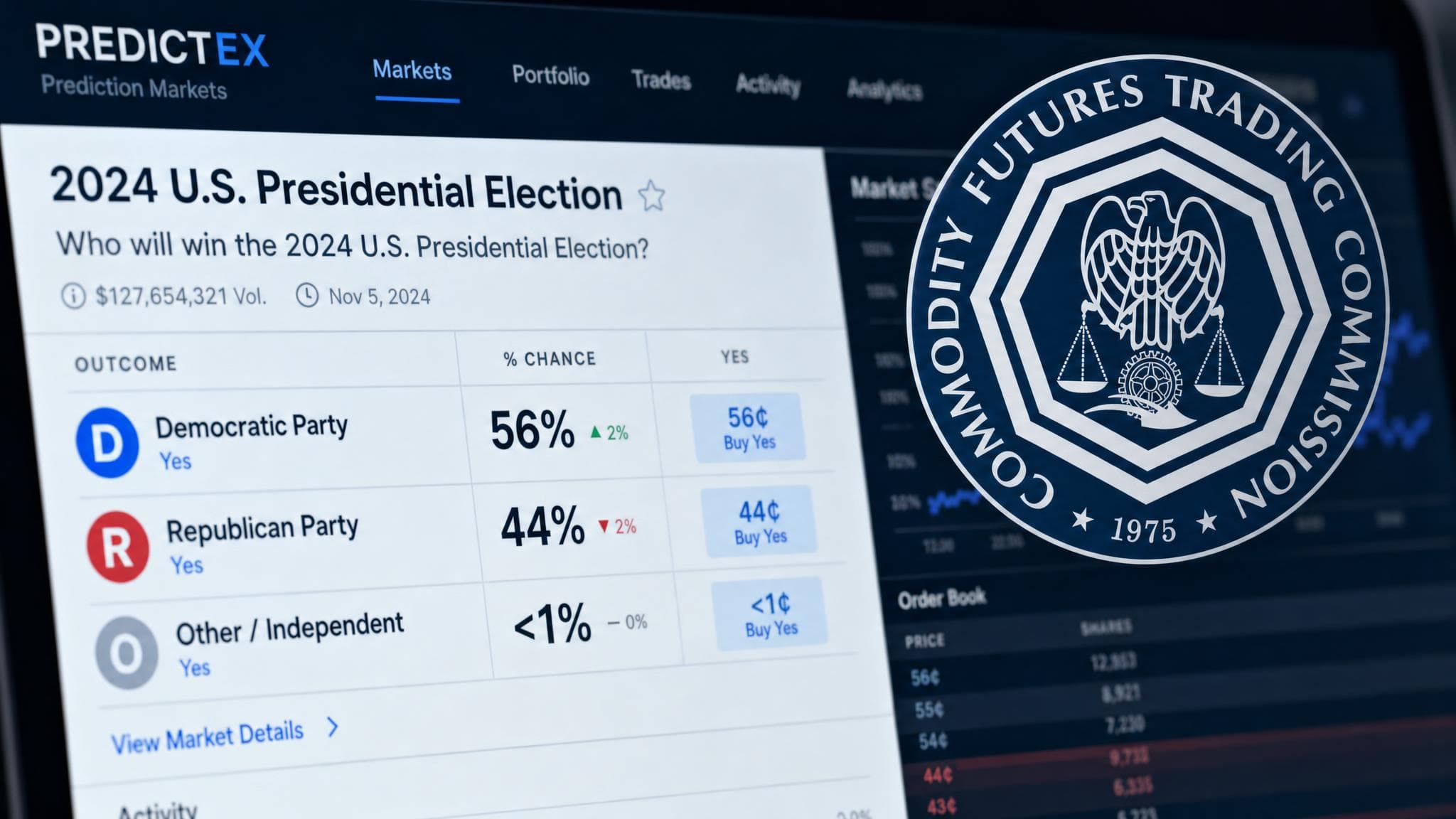
The U.S. Commodity Futures Trading Commission drew a hard regulatory line on August 7, 2026: prediction markets must stop displaying their contracts the way sportsbooks do. In a letter sent to all regulated entities and first obtained by Bloomberg, the agency told platforms to drop American-style "moneyline" betting odds — the familiar plus-and-minus format that shows how much a bettor can win from a $100 wager — and replace them with the cent-based or percentage pricing that accurately reflects how prediction market contracts actually work.
The deadline to confirm receipt: August 31, 2026. The compliance stakes: a deceptive-practices finding under the Commodity Exchange Act, the very statute platforms have been invoking to defend their federal legitimacy against a wave of state-level lawsuits.
What Moneyline Odds Are — and Why the CFTC Objects
Prediction markets price contracts in cents. A Kalshi contract on which team wins the Super Bowl might trade at 16¢, meaning the market assigns a 16% probability to that outcome. That's it. Simple, direct, transparent.
The problem begins when platforms — or their distribution partners — convert that 16¢ price into American sports betting shorthand: +525. Both numbers describe the same probability, but they feel completely different to a user. "+525" reads like a sportsbook line. It implies a potential return on a stake, not a probability. It's the visual and cognitive language of gambling.
The CFTC's letter, according to Bloomberg, cited academic research finding that moneyline-format odds encourage greater risk-taking in sports betting compared to probability-based pricing. The agency's position: displaying regulated derivatives in that format is not a cosmetic difference — it's potentially "deceptive," because it causes users to misunderstand the nature of what they're trading.
What the Letter Actually Requires
The directive applies across the board. All CFTC-regulated entities offering event contracts — designated contract markets (DCMs), introducing brokers (IBs), and futures commission merchants (FCMs) involved in prediction markets — received the letter and must confirm receipt by August 31.
Per Finance Magnates' reporting, platforms are required to present prices in "nominal or percentage terms that reflect market pricing." The instruction covers how contracts are listed, advertised, and solicited. Marketing materials that present prediction market contracts as "+900" or "-150" would need to be audited and revised.
Bloomberg noted that the agency did not publicly identify which specific platform or marketing interface prompted the industry-wide warning, though CFTC Chairman Michael Selig had previously raised concerns about this category of marketing practice.
Platform-by-Platform: Who's Complying
The platforms' responses to the Bloomberg report split along lines that will be familiar to anyone following the state-vs.-CFTC jurisdictional fight.
Kalshi moved quickly to signal compliance. A company spokesperson confirmed the platform's position in a statement: "As a federally regulated exchange, Kalshi follows CFTC guidance and will comply with the letter by its deadline." Kalshi operates as a CFTC-designated contract market and has been the most consistent defender of exclusive federal oversight throughout the regulatory battles of 2025 and 2026. Compliance with a CFTC guidance letter is the expected posture.
Polymarket did not respond to requests for comment from Bloomberg or subsequent reporting. Polymarket's U.S.-accessible venue operates through QCX LLC, a CFTC-regulated entity, though Polymarket's global platform caters primarily to non-U.S. users.
DraftKings Predictions presented a different picture. Post-Bloomberg reporting found that DraftKings' platform was still displaying sports event contracts with run lines, moneylines, and over/unders formatted as +/- odds rather than cent-based share prices, according to a review conducted the same day the Bloomberg story broke. DraftKings has not publicly responded to the CFTC letter as of this writing.
The divergence is notable. DraftKings Predictions operates on the Railbird exchange (now DKeX, a CFTC-designated contract market launched June 26, 2026), which means it is squarely within the letter's scope. DraftKings CEO Jason Robins said on the company's August 7 earnings call that the prediction industry's promotional efforts are "likely to get more scrutiny" and that "eventually they will get reined in" — a comment that predated, or was made concurrent with, Bloomberg's reporting on the letter.
Why This Is More Than a Cosmetic Dispute
The timing and context of this letter matter. In the middle of litigation in New York, Utah, Minnesota, Tennessee, and other states, the CFTC and prediction market platforms have argued the same core position: event contracts are federally regulated financial derivatives under the Commodity Exchange Act, full stop. States have no authority over them.
That argument is much harder to make when the platforms themselves present their products using the exact visual language of state-regulated sportsbooks. If a product looks like a bet, sounds like a bet, and gets marketed with the familiar +/- shorthand of a bet — a state AG's office has easy ammunition to argue it is one, whatever the federal statute says.
The CFTC's letter is, in part, regulatory self-preservation. By ordering platforms to present contracts in derivative-appropriate terms, the agency is reinforcing its own legal argument: these are financial instruments, not gambling devices. Every platform that markets event contracts with sportsbook odds formatting undermines the CFTC's position in court — which is why CFTC Chair Michael Selig, who has been asserting exclusive federal jurisdiction and suing states since 2025, pushed for this directive.
Better Markets, a financial reform advocacy group, noted the contradiction pointedly. Director of Securities Policy Benjamin Schiffrin said the CFTC is "telling prediction markets how to avoid resembling a sportsbook" — framing the letter as evidence that the agency itself recognizes the resemblance problem it has spent the better part of a year denying in court.
What Cent-Based Pricing Actually Means for Traders
Here's a point that often gets lost: the CFTC's preferred format — cents and probabilities — is objectively more informative for careful traders.
Consider the difference:
- Sportsbook display: +317 on a team winning the championship
- Prediction market display: 24¢, or 24%
Both represent the same probability. But "24¢" tells you directly what the market believes. "+317" requires conversion: divide 100 by (100 + 317) = roughly 24%. That's mental math most users won't do. And the research the CFTC cited suggests moneyline framing pushes people toward more impulsive, higher-risk behavior — because the format is optimized to make a bet feel exciting, not to communicate probability.
Traders who use prediction markets as analytical tools — who read the cents as probabilities and track market moves as signals — actually benefit from the clean probability display. The irony is that the CFTC's compliance directive aligns with what distinguishes prediction markets from sportsbooks in the most meaningful sense.
Regulatory Pressure Building from Multiple Directions
This letter arrives during one of the busiest regulatory periods the industry has seen. Simultaneously:
- New York Attorney General Letitia James sued Kalshi on July 31, 2026, claiming the platform operates as an unlicensed gambling operation under New York law.
- Utah won the first federal district court ruling siding with a state on CEA preemption (August 4, 2026).
- Minnesota's prediction market ban — signed into law in May — remains paused under a federal injunction while litigation continues.
- Tennessee's appeal to the Sixth Circuit is pending; both a win and a loss scenario could create binding precedent for the industry.
Eight active federal cases across the country are deciding who actually controls this space. The CFTC's moneyline letter is a data point in that fight — a signal that the agency is not content to win in court alone, but wants the industry's own behavior to reinforce the "these are derivatives" argument at every point of contact with users.
FAQ
What does this mean for traders on Kalshi or Polymarket right now? For most users, nothing changes immediately. Kalshi already presents prices primarily as cents and probabilities; the format change may be more visible on partner platforms (Robinhood, Coinbase) that display Kalshi contracts. The shift is mostly relevant to marketing materials and how contracts are advertised externally.
Will DraftKings face enforcement action for continuing to display moneylines? The CFTC has not announced enforcement actions tied to the letter. The August 31 deadline is to confirm receipt — not a formal compliance deadline for full operational change. That said, being on record as having ignored a CFTC guidance letter is an uncomfortable position if the agency decides to escalate.
Why did the CFTC issue a letter rather than a formal rule? Letters to regulated entities are a faster compliance tool than formal rulemaking, which requires public comment periods and Federal Register publication. The CFTC is in the middle of formal rulemaking on other aspects of event contracts (the June 2026 NPRM on sports event contract standards), but a guidance letter gets the message out in days rather than months.
Does this affect all platforms? Yes — the letter went to all DCMs, introducing brokers, and FCMs operating in the event contract space. Any CFTC-regulated entity offering event contracts, or marketing them, falls within scope.
Conclusion
The CFTC's moneyline warning is easy to dismiss as a formatting dispute. It's not. It's the regulator drawing the clearest possible line between what it believes prediction markets are — federally regulated financial derivatives — and what their critics say they really are: gambling products dressed in regulatory clothing.
Platforms that market their event contracts using sportsbook odds are handing state attorneys general exactly the narrative they need. The CFTC is telling the industry: if you want federal protection, act like a federally regulated exchange.
Kalshi is complying. The August 31 receipt deadline will tell us whether the rest of the industry agrees.
Sources & Verification
- CFTC letter obtained by Bloomberg: CFTC Warns Prediction Markets Against American-Style Casino Odds — Nicola M White and Lydia Beyoud, Bloomberg, August 7, 2026
- Finance Magnates: CFTC Tells Prediction Markets: If It's a Derivative, Don't Make It Look Like a Bet — August 7, 2026
- Kalshi spokesperson statement and August 31 compliance deadline: CFTC Orders Prediction Markets to Drop Sportsbook-Style Odds — Briefs.co, August 7, 2026
- Better Markets statement — Benjamin Schiffrin: The CFTC is Now Telling Prediction Markets How to Avoid Resembling a Sportsbook — Better Markets, August 7, 2026
- DraftKings CEO Jason Robins remarks on prediction market scrutiny: DraftKings CEO Blasts Prediction Bets on Earnings Call Comments — Yahoo Finance, August 7, 2026
- CFTC regulatory authority over prediction markets: CFTC.gov — Designated Contract Markets
- Senators Schiff and Padilla letter on wildfire prediction market oversight: Schiff.senate.gov press release — August 3, 2026