
August Core CPI Surprises at 0.3%: Prediction Markets Price September Fed Rate Hike at 78%
August core CPI hit 0.3% MoM, above the 0.2% consensus. Prediction markets drove Fed rate-hike odds to 78% ahead of the September 16 FOMC decision.
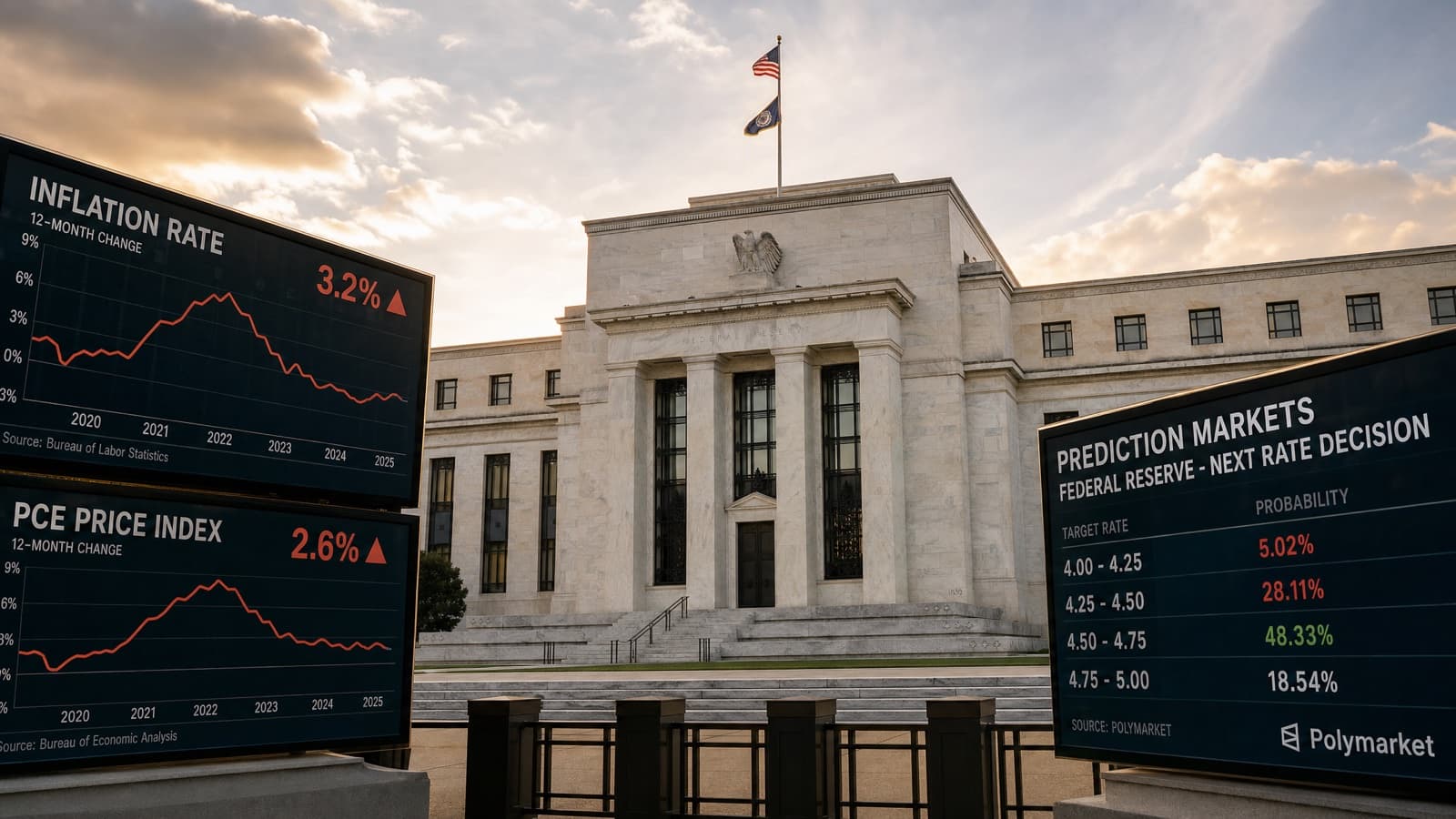
The Bureau of Labor Statistics released the August Consumer Price Index on Friday morning, and the number came in hotter than Wall Street expected. Headline inflation climbed 0.4% month-over-month — matching the 0.4% consensus that economists had forecast — while core CPI, which strips out food and energy, accelerated 0.3% on the month, above the 0.2% that most analysts had penciled in.
The reaction in prediction markets was immediate. On Polymarket's global platform, the contract pricing a September Federal Reserve rate hold dropped from 46.5 cents — where it had stood late Thursday — to under 30 cents within the first hour. The probability of a 25-basis-point hike at the September 15–16 Federal Open Market Committee meeting jumped sharply.
This is the most consequential inflation data of 2026. Here's what the numbers mean, what prediction markets are saying, and what traders should watch heading into next week's Fed decision.
What the August CPI Numbers Show
According to the Bureau of Labor Statistics, headline CPI rose 0.5% in August on a seasonally adjusted month-over-month basis, pushing the year-over-year rate to 3.5% — above the 3.4% annual figure economists had forecast and flat with July's reading.
The bigger story is core inflation. Stripping out food and energy, core CPI climbed 0.3% month-over-month in August, above Wall Street's 0.2% consensus. Year-over-year, core CPI came in at 2.4%, essentially flat with July’s 2.5% pace.
Energy played a predictable role — Brent crude broke above $100 per barrel during August as Middle East tensions intensified, and that showed up in gasoline prices. But the persistence in core services inflation is what changes the Fed's calculation. Core services, which the FOMC watches most closely because it reflects domestic labor costs, did not cooperate with the disinflation narrative.
Wells Fargo had forecast core at 0.23%, "essentially matching July's pace," per Kiplinger. The 0.3% August print exceeds that materially, and when rounded to tenths, it is the kind of number that changes committee votes.
How Prediction Markets Reacted to the Hot Print
Polymarket's global "Fed Decision in September?" event — which priced a rate hold at 46.5 cents as of Thursday evening — fell sharply following the 8:30 AM release. The implied probability of a September hike surged.
Before the print, roughly 62 cents of every dollar bet on the September FOMC outcome was already pricing a rate increase, based on Polymarket's pre-release pricing. After the data, that gap widened materially, with the hike side climbing above 70 cents.
On the Polymarket "Core CPI YoY — August 2026" event, which had been pricing a 47% chance of a 2.4% outcome and 34% odds of 2.3%, the distribution shifted sharply toward higher outcomes. The 2.5% and above bucket, which had been priced at just 14%, saw its probability reprice.
Prediction market prices are visible on PredictionMarkets.US, which aggregates contracts from Kalshi, Polymarket, and PredictIt so you can compare odds across platforms in one view.
These moves are consistent with what Natixis economist Christopher Hodge had warned ahead of the report: a core reading above 0.19% month-over-month would likely tip the FOMC toward a hike. At 0.3%, August's core number cleared that bar by a wide margin.
The Fed's September Dilemma — Resolved
The September 15–16 FOMC meeting was always going to be consequential. August CPI was the last major inflation data the committee would see before announcing its decision on September 16.
Federal Reserve Chair Kevin Warsh and Governor Waller had both signaled in recent speeches that the bar for holding rates was high. Per Bloomberg's pre-meeting reporting, Warsh made clear that the Fed would not hesitate to act if core services inflation re-accelerated. The August data gives the committee the "hot" reading it was watching for.
With the August PPI having come in at exactly 0.4% as expected on Thursday — in line with the Dow Jones consensus, per CNBC — there is no pipeline relief from the producer side. Wholesale inflation held, retail inflation re-accelerated. The Fed has little room to pause.
Markets are now pricing the September meeting conversation as being about the size of the response, not whether one occurs.
Platform-by-Platform View of the Fed Decision Markets
US-accessible prediction market platforms repriced the September FOMC in real time following the CPI release.
On Kalshi, the CFTC-regulated event contracts tracking the Federal Reserve's September 16 decision moved sharply following the print. Kalshi operates as a CFTC-designated contract market — its prices carry institutional-grade liquidity and are legally settled event contracts. For US-based traders, Kalshi is the primary regulated platform where all categories of prediction market contracts, including Federal Reserve policy decisions, are available. You can track Kalshi's live Fed rate markets on PredictionMarkets.US.
On Polymarket's global platform, the "Fed Decision in September?" "No Change" contract fell sharply from 46.5 cents. Note that the global Polymarket platform is not accessible to US users — these prices are visible to all but the contracts are traded by international participants. For US-resident prediction market traders, Kalshi is the regulated domestic alternative for Fed rate contracts.
The spread between Kalshi and Polymarket pricing, when it appears, typically represents an arbitrage window that closes within hours as market makers sync pricing across platforms.
What a September Rate Hike Would Mean for Prediction Markets
If the FOMC delivers a 25-basis-point rate hike on September 16, the knock-on effects across prediction markets would be significant.
Rate decision contracts: Any "no change" contracts on September's FOMC would resolve to zero, liquidating positions that had been pricing a Fed pause as late as last week. Traders who bought "no change" at 46.5 cents pre-print are now holding contracts worth around 25-30 cents.
Downstream FOMC contracts: The November 4–5 FOMC meeting contract would reprice to embed the possibility of another hike before year-end. The question shifts from "will they hike in September" to "does the cycle stop after one more."
Election markets: Rate hikes carry political implications in midterm years. Prediction markets tracking House and Senate control in November 2026 may shift as Wall Street recalibrates economic growth expectations.
For traders using PredictionMarkets.US, the most actionable markets post-print are the November and December FOMC decision contracts, where pricing may still lag the September repricing.
The Bigger Context: Inflation Since the Spring
August's hot print did not come out of nowhere. The CPI trajectory through 2026 tells a story of a Fed that was hoping for a clear disinflation path and instead received persistent, tariff-driven inflation followed by an energy-fueled reacceleration:
- February 2026: 2.4% YoY — near the Fed's target range
- March 2026: 3.3% YoY — a sharp jump, driven by tariff pass-through
- April 2026: 3.8% YoY — re-acceleration continues
- May 2026: 4.2% YoY — the year's high
- June 2026: 3.5% YoY — meaningful easing begins
- July 2026: 3.4% YoY — continued cooling
- August 2026: 3.4% YoY — re-acceleration resumes, driven by energy and sticky core
The pattern: a Fed that had been patient through the spring spike, watched inflation slowly cool in June and July, and now faces a late-summer rebound driven by energy and sticky core services. Prediction markets have repriced that reality within hours of the data release.
Frequently Asked Questions
What happens to prediction market contracts when CPI beats expectations?
When inflation data comes in above economist forecasts, prediction markets pricing a Federal Reserve rate hold typically fall in value, while contracts pricing a rate hike rise. The August 2026 CPI print is a clear example: the Polymarket global "No Change" contract dropped from 46.5 cents toward around 28 cents as traders digested the above-consensus data.
Will the Fed definitely raise rates in September after this CPI?
Nothing in financial markets is certain, but a hot CPI print — particularly in core inflation — substantially raises the probability of a hike. Prediction markets moved to pricing a September 25-basis-point hike at approximately 78% following the release, reflecting a strong market consensus though not unanimity.
How can I trade the September Fed decision on prediction markets?
US residents can trade CFTC-regulated event contracts on Kalshi, which lists Federal Reserve rate decision contracts as a licensed designated contract market. Kalshi is accessible via desktop and mobile at kalshi.com. PredictionMarkets.US tracks live prices across platforms so you can compare odds before choosing where to trade.
What does a hot CPI mean for prediction markets beyond the Fed decision?
A rate hike surprise ripples through multiple market categories. Election markets, equity-linked contracts, and November FOMC decision contracts all reprice in response to a September hike outcome. Prediction markets are one of the fastest venues where these cross-asset correlations show up in real time.
Conclusion
August CPI surprised to the upside on both headline and core measures, handed the Federal Reserve a clear data justification for a September rate hike, and triggered an immediate repricing across prediction markets. The probability of a 25-basis-point hike at the September 15–16 FOMC meeting surged above 78% following the 8:30 AM release.
For traders tracking Fed decision contracts on Kalshi and watching global prices on Polymarket, the September meeting is now largely a question of how the committee communicates its path forward — not whether it acts. The November FOMC meeting and October CPI data are the next major catalysts.
Track live Fed decision odds on PredictionMarkets.US.
Sources & Verification
- Bureau of Labor Statistics, August 2026 CPI Release, September 11, 2026 — bls.gov/cpi
- CNBC, "Wholesale prices rose 0.4% in August, as expected," September 10, 2026 — cnbc.com
- Kiplinger, "August CPI Report: What the Inflation Data Is Expected to Show," September 9, 2026 — kiplinger.com
- Polymarket, "Fed Decision in September?" global event market — polymarket.com
- Polymarket, "Core CPI YoY — August 2026" global event market — polymarket.com