
Arizona Moves to Dissolve Kalshi's Federal Shield — And the Rest of the West Is Watching
Arizona asked the Ninth Circuit to vacate Kalshi's protective injunction using Nevada precedent—and other states are doing the same across the West.
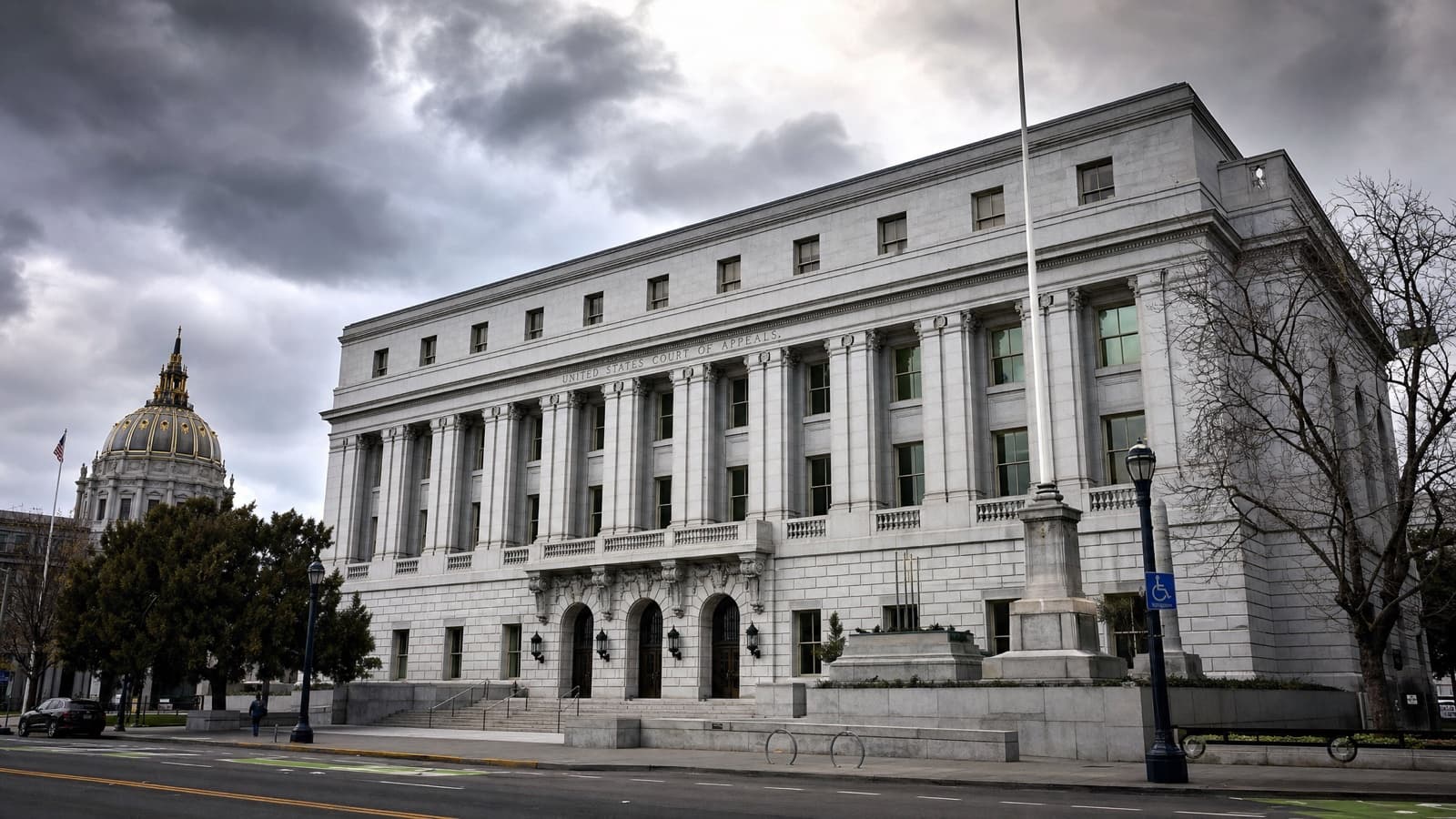
Arizona has filed a motion asking the U.S. Court of Appeals for the Ninth Circuit to summarily vacate the preliminary injunction that has, since May, shielded Kalshi from state criminal prosecution. Arizona Attorney General Kristin Mayes is invoking the Ninth Circuit's August 28 ruling in KalshiEX v. Assad — the Nevada decision — as binding precedent that, she argues, eliminates the legal foundation for that protection. If the Ninth Circuit agrees, Kalshi's last major federal shield in the American West could dissolve before the NFL season ends.
The motion, filed September 14, represents something more than a single state's legal gambit. It is the clearest illustration yet of how one appellate ruling can cascade through an entire circuit — and how the states that lost early rounds are now using the Ninth Circuit's own words to reopen closed doors.
What Arizona Is Asking For
The timeline matters here. In March 2026, Arizona prosecutors filed criminal charges against Kalshi, alleging the platform operated an illegal gambling business under state law. Kalshi, backed by its regulator, the Commodity Futures Trading Commission (CFTC), challenged those charges in federal court. On May 5, 2026, U.S. District Judge Michael T. Liburdi issued a preliminary injunction blocking the state from proceeding with criminal enforcement — finding that federal law likely preempted Arizona's gaming statutes.
That injunction has been the wall between Kalshi and Arizona's courts ever since.
Then the Ninth Circuit handed down KalshiEX v. Assad on August 28. The three-judge panel ruled that Kalshi's sports event contracts are "likely not swaps" under the Commodity Exchange Act, stripping away the preemption argument Kalshi and the CFTC had used to win protective injunctions across the country. Nevada's gaming regulators, the panel said, were free to enforce state law — the federal exchange registration offered no shield.
Arizona AG Mayes read that ruling and saw something: the very legal theory that won Kalshi the May 5 injunction had now been rejected by the same court. On September 14, her office asked the Ninth Circuit (case No. 26-2978) to summarily vacate the sports-contract portion of the May 5 preliminary injunction, sending the election-contract issues back to the district court for separate proceedings. The state's brief is direct: KalshiEX v. Assad "is now the law of this circuit."
The Ninth Circuit has not yet ruled on Arizona's request.
A Second Blow the Same Week
Two days after the Arizona motion, the Ninth Circuit issued another decision that compounded Kalshi's legal exposure in the West. On September 16, a three-judge panel in Blue Lake Rancheria et al. v. KalshiEX LLC et al. (No. 25-7504) ruled that sports event contracts offered on tribal lands likely violate the Indian Gaming Regulatory Act (IGRA) — and that this conclusion holds even if Kalshi's contracts were swaps under the Commodity Exchange Act.
That second ruling is significant because it closes a theoretical escape hatch. Kalshi had argued that if its contracts were classified as swaps, the CEA's exclusive-jurisdiction clause would preempt state and tribal gaming law entirely. The Blue Lake panel rejected that reading, holding that the CEA expressly preempts only "State or local law that prohibits or regulates gaming" and does not reach separate federal statutes like IGRA. A federal statute cannot preempt another federal statute on the same basis.
The Indian Gaming Association responded immediately. IGA Chairman David Z. Bean issued a statement calling the decision "a victory for tribal sovereignty" and warning that "Congress did not create IGRA only to have its protections disappear when gambling moves onto a phone."
Chief Judge Mary H. Murguia and Judges M. Margaret McKeown and Richard A. Paez wrote the opinion, reversing U.S. District Judge Jacqueline Scott Corley's earlier denial of an injunction. The case was remanded to Corley to weigh the remaining preliminary-injunction factors — Kalshi is not yet barred from tribal lands, but the tribes are now likely to win that final step.
The Circuit Split and the States Exploiting It
The Ninth Circuit's rulings stand in direct conflict with the Third Circuit. In KalshiEX LLC v. Flaherty (No. 25-1922), decided April 6, 2026, the Third Circuit ruled 2-1 that the CEA does preempt New Jersey's gaming law — handing Kalshi a win over Garden State regulators. The Third Circuit held that Kalshi's sports event contracts are likely swaps and that the CEA's exclusive-jurisdiction clause controls.
That split — the Third Circuit for preemption, the Ninth Circuit against it — is now the engine driving the litigation across the country. Every state with an active case against Kalshi is watching which circuit they sit in and adjusting their legal strategy accordingly.
Arizona is in the Ninth Circuit, so Assad is binding precedent in its favor. Maryland, which sits in the Fourth Circuit, has already cited Assad as supplemental authority in its own appeal against Kalshi, arguing the Ninth Circuit's reasoning supports the state's position even though it is not binding there. Illinois, in the Seventh Circuit, has similarly moved to submit the Iowa federal decision — which denied Kalshi a preliminary injunction — as supplemental authority in its own pending case.
The pattern is clear: states are treating each adverse Kalshi ruling as a tool to use in their own proceedings, regardless of circuit boundaries.
In Montana — also within the Ninth Circuit's jurisdiction — Kalshi's own lawsuit against state gambling regulators has been paused while the broader circuit-level review plays out, with state enforcement remaining contingent on the outcome of the en banc process.
What the Ninth Circuit Does Next
Kalshi has not accepted the Nevada ruling as final. On September 9, the company petitioned the Ninth Circuit for rehearing and rehearing en banc of the Assad decision — asking the full court, rather than a three-judge panel, to reconsider the ruling. Robinhood Derivatives, also named in the Nevada case as a registered futures commission merchant that routes orders for Kalshi's event contracts, went further and petitioned the U.S. Supreme Court to take up the question.
New Jersey filed its own SCOTUS certiorari petition on September 2, asking the Court to resolve directly whether the Dodd-Frank Act preempts states from regulating sports bets offered on CFTC-registered markets. The petition explicitly names the Third–Ninth Circuit split as the vehicle for Supreme Court review.
None of these requests have been granted yet. En banc grants are relatively rare — the full Ninth Circuit sits 29 judges and grants en banc review in only a small fraction of cases. The Supreme Court takes fewer than 100 cases per term. Even if either court agrees to hear the dispute, a decision is unlikely before spring 2027 at the earliest.
In the interim, the legal map fragments. Kalshi currently faces active state-level restrictions in Nevada, Michigan, and Washington state, while facing pending or active enforcement threats in Arizona, Illinois, Maryland, Massachusetts, New York, Minnesota, Montana, Rhode Island, and Wisconsin. The Third Circuit's New Jersey ruling provides a defense in the eastern circuits, but the Ninth Circuit — covering California, Arizona, Montana, and eight other western states — has now ruled against Kalshi twice in three weeks.
What Prediction Market Traders Need to Know
For traders on Kalshi and other CFTC-registered platforms, several points are worth keeping clearly in mind.
Sports markets only. The legal fight is specifically about sports event contracts. Kalshi's election markets, financial markets, economic indicator markets, and other non-sports categories are not the subject of any of these state enforcement actions or the appellate rulings described here. A trader who only uses Kalshi for economic or political markets is unaffected by these cases.
Availability is state-dependent and changing. If the Ninth Circuit grants Arizona's vacatur motion, Arizona could resume its push to criminally prosecute Kalshi's sports-market operations in the state. Kalshi would almost certainly respond by geofencing Arizona sports contracts, as it has done in Nevada. The timeline for such a ruling is unclear — it could come in days or take several weeks.
The CFTC's position is still the law in many jurisdictions. The CFTC continues to argue in courts across multiple circuits that its registration of Kalshi as a designated contract market gives the exchange exclusive federal jurisdiction. That argument has won in some districts (Tennessee, the Third Circuit) while losing in others. Until the Supreme Court or a full en banc Ninth Circuit resolves the split, the law literally depends on which courthouse you are in.
Monitor your platform directly. Given the rate of change in this litigation — multiple rulings per week, motions being filed daily — the most reliable real-time source on state availability is Kalshi's own help center and app notifications.
Frequently Asked Questions
What is the May 5 preliminary injunction Arizona wants to vacate? It is a court order issued by U.S. District Judge Michael T. Liburdi that blocked Arizona from proceeding with criminal charges against Kalshi while the federal preemption question was litigated. Preliminary injunctions are temporary orders issued at the start of a case; they are not final rulings on the merits. Arizona is arguing that the Ninth Circuit's later KalshiEX v. Assad ruling so thoroughly undermines the legal basis for the injunction that the appeals court should dissolve it without a full hearing.
What does the 3rd–9th Circuit split mean for traders? It means the legality of Kalshi's sports contracts differs depending on geography. In states under the Third Circuit (New Jersey, Pennsylvania, Delaware, and the Virgin Islands), federal preemption arguments are more likely to protect the platform. In states under the Ninth Circuit (California, Arizona, Nevada, Montana, Oregon, Washington, Idaho, Alaska, Hawaii, and the Pacific territories), state gaming laws have a much stronger legal foothold. Other circuits — the Second, Fourth, Sixth, Seventh, Eighth, and Tenth — are still working through the question.
When might the Ninth Circuit rule on Arizona's vacatur request? Summary-disposition motions like Arizona's can be decided in a matter of weeks, though the court could also set the question for full briefing, which would take longer. Separately, Kalshi's en banc petition could produce a ruling — or a denial — within the same timeframe. The two proceedings may resolve around the same time, or one could overtake the other.
Will Kalshi's election and financial markets be affected? The current state enforcement actions and appellate rulings are aimed specifically at sports event contracts. Arizona's original criminal charges, the Nevada enforcement, and the KalshiEX v. Assad ruling all involve sports markets. Kalshi's election markets — which are separately regulated under different CFTC certification filings — are not the subject of these proceedings and are not currently at risk of state-level enforcement under this litigation track.
Sources & Verification
- Ninth Circuit opinion, Blue Lake Rancheria et al. v. KalshiEX LLC et al., No. 25-7504, September 16, 2026
- IGA Chairman David Z. Bean statement on Ninth Circuit IGRA ruling, September 17, 2026
- SF Chronicle: "Kalshi ruled a gambling operation by appeals courts in Indian casino case," September 16, 2026
- Courthouse News: "Ninth Circuit deals blow to Kalshi on tribal land," September 16, 2026
- Gambling Insider: "Football Fuels Record Weekend for Prediction Markets" — Arizona AG Sept. 14 motion detail, September 15, 2026
- Legal Sports Betting: "Ninth Circuit Narrows Kalshi's Preemption Defense," September 17, 2026
- InGame: "Kalshi's Request For A Ninth Circuit Rehearing Handcuffs States," September 15, 2026