
44 State Attorneys General Tell the CFTC It Has No Authority Over Sports Prediction Markets
A bipartisan coalition of 44 state AGs filed a comment letter on the final night of the CFTC's Rule 40.11 comment period, arguing the agency overstepped its authority. The Dodd-Frank author and CME Group agree. Here is what happens next.
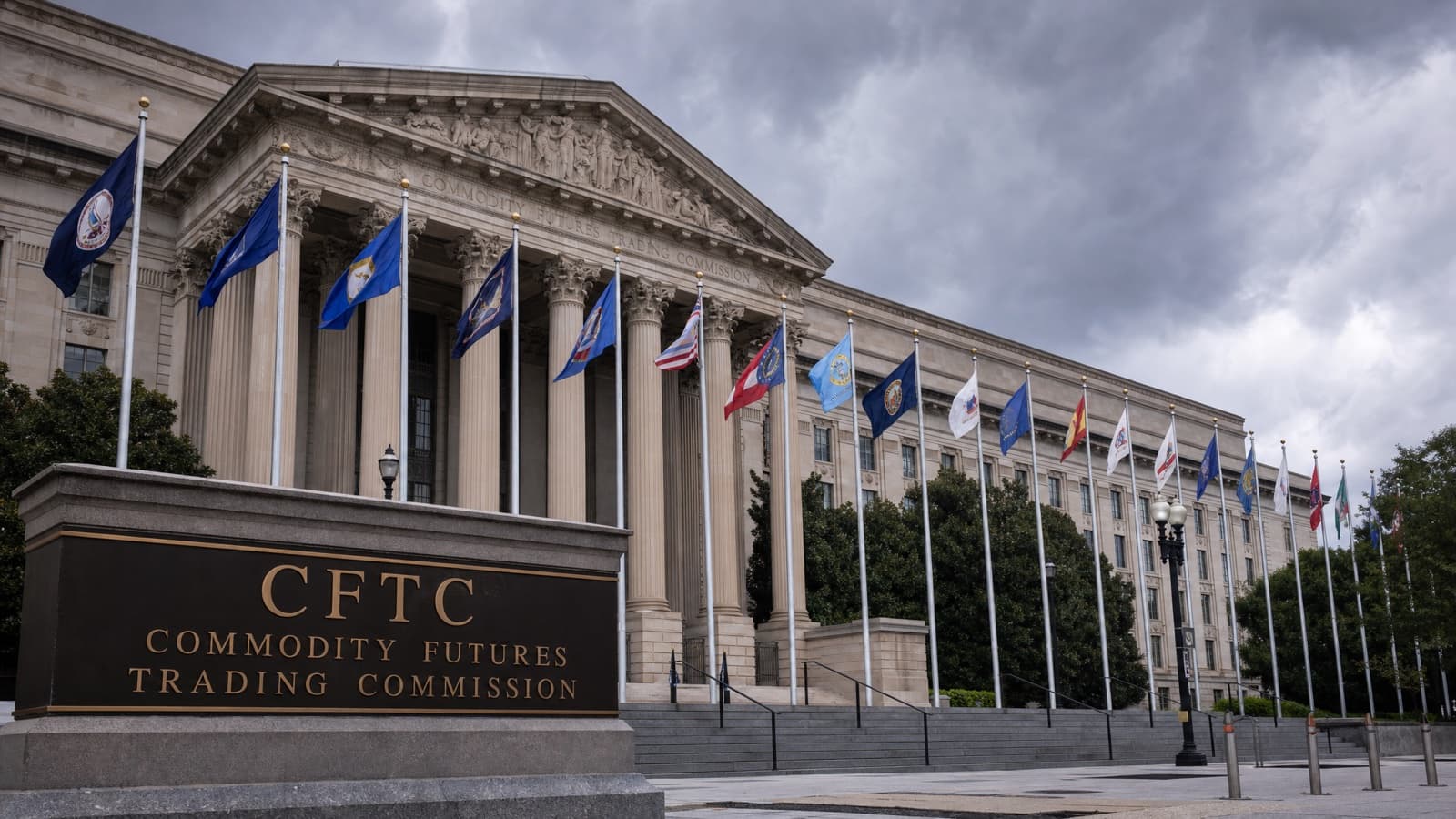
On the final night of the federal rulemaking comment period, a bipartisan coalition of 44 state attorneys general delivered an unambiguous message to the Commodity Futures Trading Commission: start over. The letter, submitted July 27 as the CFTC's first proposed prediction market rule closed for public comment, argues that the agency has overstepped its statutory authority, acted contrary to the U.S. Constitution, and would be "arbitrary and capricious" under the Administrative Procedure Act if it finalized the rule as written.
The filing represents the most coordinated state challenge to federal prediction market oversight to date — and it arrives as the CFTC faces parallel pressure from Congress, federal courts, and an increasingly fractured industry coalition.
What Is Rule 40.11 and Why It Matters
On June 10, 2026, the CFTC issued a Notice of Proposed Rulemaking (NPRM) — CFTC Press Release 9249-26 — proposing amendments to Rule 40.11, the regulatory hook the agency uses to review event contracts it believes are contrary to the public interest. Under current law, the CFTC can initiate a 90-day review of any event contract it believes "involves, relates to, or references" activities including gaming, terrorism, assassination, or war.
The NPRM, published in the Federal Register on June 12 with a 45-day comment period, proposes a formal three-step review framework: first, determine whether a contract qualifies as an event contract; second, assess whether its settlement is "determined by" an enumerated activity; and third, conduct a public-interest review before deciding whether to permit trading.
Sports-related event contracts — game winners, point spreads, team statistics — sit squarely in the crosshairs. The NPRM crafted a definition of "gaming" as something "done for recreation or to entertain, governed by rules and based on measurable outcomes determined by skilled activity during the activity." More than 1,000 comments arrived before the deadline.
The 44-State Coalition's Core Arguments
The coalition, led by Ohio Attorney General Andy Wilson, filed a comment that reads like a constitutional brief against the entire regulatory framework.
CFTC lacks statutory authority. The attorneys general argue that sports bets are not swaps, futures, or other derivatives under the Commodity Exchange Act — they are gambling products that Congress never intended the CFTC to regulate. "The Proposed Rule goes beyond the CFTC's statutory powers, is in tension with the Constitution, and would otherwise be arbitrary and capricious in its current form," the letter states. "The CFTC should start afresh with its rulemaking and clarify that sports bets and gambling cannot be traded on designated contract markets, but are instead subject to state law."
Gambling is state police power. The coalition emphasizes that states have regulated gambling — including sports betting — for well over a century, while "the federal government has not." The letter points to gambling regulation as a power recognized by courts as traditional state authority, from colonial-era prohibitions through today's state licensing regimes.
Conflicts with existing federal statutes. The AGs argue the CFTC's rule would constitute an implied repeal of the Wire Act of 1961 (which prohibits interstate sports wagering) and conflict with the Indian Gaming Regulatory Act, which gives tribal nations exclusive rights to regulate gaming on their lands. Federal courts are reluctant to accept implied repeal without clear congressional authorization.
APA grounds for litigation. By invoking the arbitrary-and-capricious standard, the coalition is explicitly telegraphing a legal strategy: the moment a final rule is published, they intend to challenge it in federal court under the Administrative Procedure Act.
A Notable Voice: The Dodd-Frank Author
The AG letter was not the only high-profile filing against the proposed rule. Former Senator Christopher Dodd — the primary architect of the 2010 Dodd-Frank Wall Street Reform Act that expanded the CFTC's derivatives authority — submitted his own comment opposing the rule, according to Bloomberg Law.
Dodd wrote that the CFTC's proposed regulations "would undermine both the letter and the spirit of the law, infringe on state and tribal sovereignty, and pose grave risks to ordinary consumers." The Dodd-Frank author arguing that the CFTC is misreading his own legislation carries particular legal weight as the agency defends its jurisdictional claim in federal court.
44 States, But Not 50 — Who Signed and Who Didn't
Attorneys general from Florida, Georgia, New Hampshire, Missouri, and Texas did not sign the coalition letter. The coalition has grown from approximately 40 signatories in an earlier filing to 44 now, reflecting sustained coordination among state regulators as the legal fight intensifies.
North Carolina took an entirely opposite approach: a law signed July 7 explicitly recognizes the CFTC's exclusive federal authority over prediction markets, permits CFTC-registered platforms to operate in the state beginning January 1, 2027, and imposes a 6% tax on trading fee revenue from North Carolina residents. If courts ultimately affirm CFTC preemption, North Carolina's framework may serve as a template for other states looking to tax and regulate rather than ban.
The Other Side: Industry Wants a Federal Framework
The comment record split along largely predictable lines. Coinbase, Hyperliquid, Multicoin Capital, and a coalition of platform operators filed in support of the CFTC finalizing a clear federal framework, arguing that a single national standard serves traders far better than a patchwork of 50 state gambling regimes. For the platforms, federal preemption is the primary legal defense against the nine states where the CFTC has filed suit on their behalf.
But even the industry side fractured. CME Group — a derivatives exchange that operates as the CFTC-regulated infrastructure for FanDuel's prediction markets — filed its own letter objecting to the CFTC's definition of "gaming." CME's general counsel Jonathan Marcus warned that by defining "gaming" as the sport itself rather than the financial wagering on the sport, the CFTC's definition "suggests the Commodity Exchange Act is preempting state sports regulations, which is a striking overreach."
The major US sports leagues — the NFL, Major League Baseball, all major player unions, and the American Gaming Association — also filed opposing the rule, though on different grounds: they want tighter restrictions on contracts tied to individual player actions, officiating decisions, and integrity-sensitive outcomes, not simply to preserve state authority over gambling.
The Court Landscape Behind the Rulemaking
The CFTC has filed suit against nine states to defend what it calls its "exclusive jurisdiction" under the Commodity Exchange Act. The court record is split.
Platforms have prevailed in the Third Circuit and Middle District of Tennessee. They have lost — or been denied preliminary injunctions — in the Sixth Circuit (an earlier ruling), the District of Arizona, District of Maryland, District of Nevada, and twice in the Southern District of New York, where Judge Analisa Torres has denied Kalshi's requests for preliminary relief. New York's enforcement of its gambling laws against prediction market platforms remains in effect.
On July 28, the same day the comment period closed, a federal judge in Minnesota temporarily blocked the state's new prediction market ban from taking effect — a platform win. Hours later in New York, a different judge denied another motion to block the state, extending the platform loss in that jurisdiction.
The Sixth Circuit heard consolidated oral arguments today in Ohio and Tennessee cases. Early signals from the bench were pointed: one judge reportedly described Kalshi's contracts as sounding "like a bet subject to Native American gambling laws," raising the possibility that tribal sovereignty could become a carved-out exception to the preemption framework the platforms rely on most.
Legal observers broadly agree the Supreme Court will likely have the final say on the core jurisdictional question. Until then, where you can trade prediction market sports contracts depends on which state you're in — and which platform you use. Check the current state-by-state status at PredictionMarkets.US.
Live prediction market — will Congress ban sports prediction markets in 2026?:
What Comes Next for Prediction Markets and Their Users
The CFTC must now review more than 1,000 comments before issuing a final rule. If finalized, the rule would take effect 60 days after publication in the Federal Register. The AGs' APA-based letter is explicitly designed to be the opening brief in future litigation — the agency will need to directly respond to those arguments in the final rule's preamble, or face a stronger challenge in court.
The rule faces additional Congressional crosscurrents. The CLARITY Act would create a statutory framework explicitly authorizing prediction markets at the federal level. The STOP Corrupt Bets Act, backed by state-aligned senators, would take the opposite approach. Neither has reached a final floor vote as of this writing.
For traders using platforms like Kalshi and Polymarket, the immediate practical question is whether sports event contracts remain available in your state. The CFTC's litigation posture — suing nine states over the past year — has kept platforms operating in most of the country. That protection depends on those lawsuits continuing and ultimately prevailing, which is far from guaranteed given the current court split.
FAQ
What is the CFTC's Rule 40.11?
Rule 40.11 is the CFTC regulation that allows the agency to review and potentially prohibit event contracts it determines are contrary to the public interest. The 2026 NPRM proposes a formalized three-step review framework and introduces a definition of "gaming" that would cover sports-related event contracts traded on prediction market platforms.
Why are state attorneys general challenging the CFTC's authority?
States argue that gambling has historically been regulated at the state level, not by federal commodities regulators. The 44 AGs contend that sports event contracts on prediction market platforms function as sports bets — not financial derivatives — and therefore fall outside the CFTC's jurisdiction under the Commodity Exchange Act. They also argue that a federal rulemaking of this scope requires explicit Congressional authorization that doesn't exist.
Can states still ban prediction markets while this federal rulemaking is pending?
Yes. Several states have enacted bans or restrictions that are currently being enforced or challenged in court. The CFTC has filed suit against nine states arguing federal law preempts those bans, but courts have issued conflicting rulings. Until the Supreme Court settles the core jurisdictional question, enforcement continues to vary by state.
What would it mean for Kalshi and Polymarket if the CFTC's rule is struck down?
If a federal court vacates a final Rule 40.11, the CFTC would likely lose its primary legal basis for preempting state-level enforcement. States that have enacted bans could enforce them more aggressively, potentially requiring platforms to geo-block sports event contracts for users in those jurisdictions. The platforms would remain CFTC-registered designated contract markets — but that registration alone may not override state gambling authority in the absence of a valid preemption rule.
Conclusion
The 44-AG letter closes the public comment chapter of the CFTC's first prediction market rulemaking — and simultaneously opens the next one: federal litigation. With the Dodd-Frank author, 44 bipartisan state attorneys general, the NFL, MLB, and CME Group all on record against the rule, the CFTC faces a comment record that cannot be easily dismissed. The prediction market industry's best outcome is a final rule that survives judicial review. Its worst case is a rule that is immediately stayed by a federal court, leaving the patchwork enforcement landscape in place indefinitely.
Whatever the CFTC decides, the comment record that closed July 27 has made one thing unmistakably clear: the fight over who regulates sports prediction markets in America is far from over.
Sources & Verification
- 44-AG coalition letter, coalition details, quote from Ohio AG Andy Wilson: CNBC, July 28, 2026 — verified July 29, 2026
- Sen. Dodd filing, CME Group letter details, Bloomberg Law reporting: Bloomberg Law, July 28, 2026 — verified July 29, 2026
- CFTC Rule 40.11 NPRM (Press Release 9249-26, June 10, 2026): CFTC.gov press releases — primary source
- NPRM comment deadline, procedural timeline, Rule 40.11 three-step framework: Skadden NPRM analysis, June 2026 — verified against CFTC.gov
- 10 takeaways from CFTC NPRM, enumerated activities detail: WilmerHale client alert, June 18, 2026 — verified July 29, 2026
- CRS analysis, CFTC litigation history, gaming definition legal context: Congress.gov CRS LSB11441 — primary source
- Maryland AG coalition participation (official state press release): Maryland AG official press release — primary source, verified July 29, 2026