
2028 Presidential Election Prediction Markets: Current Odds, Top Platforms, and How to Trade
Over $1.2 billion already traded on the 2028 race. Get live odds for Vance, Newsom, and Rubio, learn how election prediction markets work, and find the best platforms to trade.
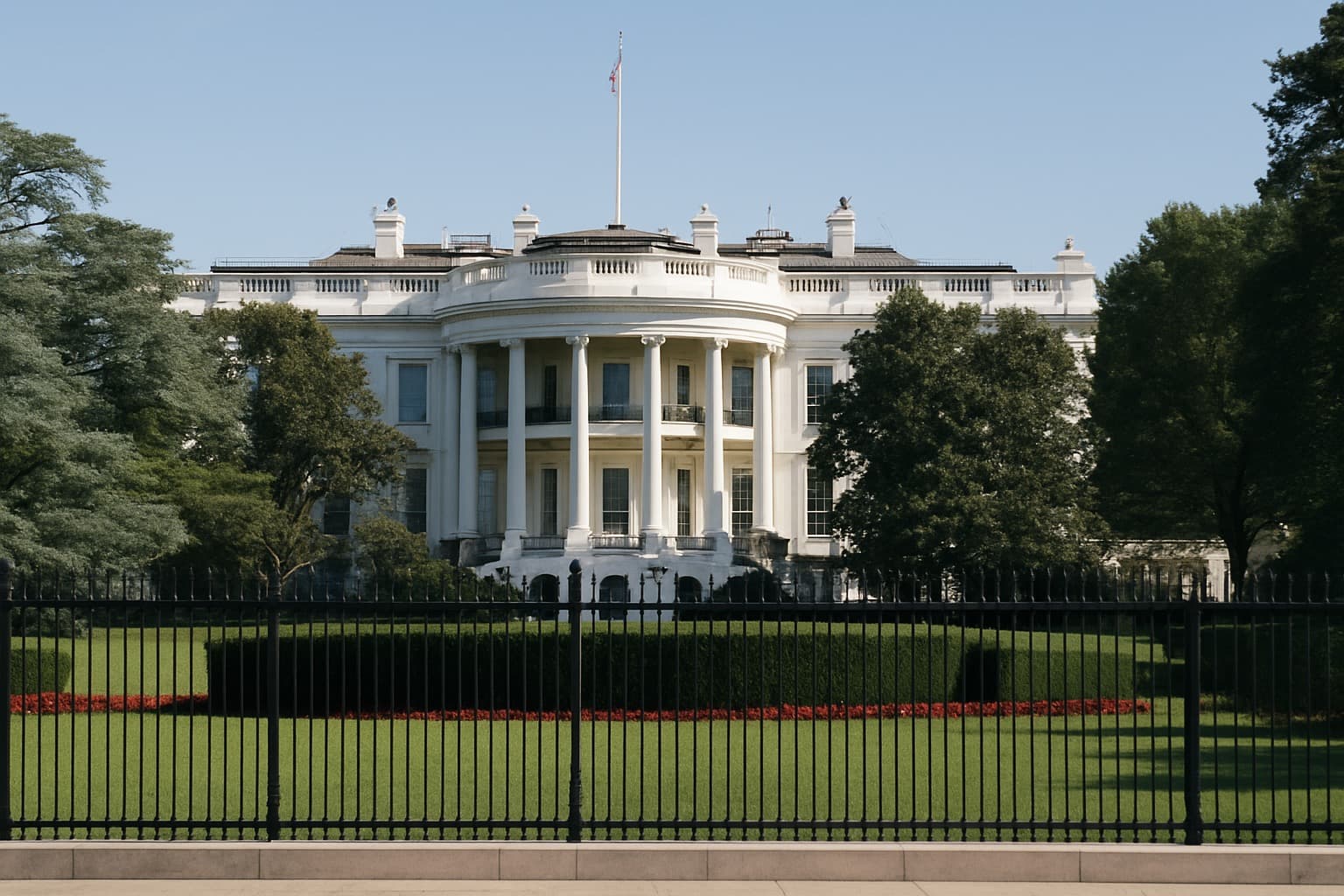
More than $1.2 billion has already been traded on the 2028 presidential race — and the election is still two and a half years away.
If you've ever wanted to back your political instincts with real money, prediction markets are the only legal way to do it in the United States. And right now, the 2028 race is one of the most liquid, most-watched markets on the planet. This guide breaks down the current odds, which platforms to use, how the markets actually work, and the strategies experienced traders use to get an edge.
What Are 2028 Election Prediction Markets?
Prediction markets are federally regulated exchanges where you buy and sell contracts on future events. Think of each contract as a simple yes/no bet: "Will JD Vance win the 2028 presidential election?" If you buy that contract at 20¢ and he wins, it pays out $1.00 — a 5x return. If he loses, it's worth zero.
The price of each contract reflects the crowd's collective estimate of probability. A 20¢ contract = the market thinks there's roughly a 20% chance that outcome occurs. Prices move in real time as news breaks and traders update their views.
This is meaningfully different from a sportsbook. You're not betting against the house — you're trading with other market participants on an exchange, the same way stocks trade. Prices are set by supply and demand, not by oddsmakers trying to ensure margin.
In the United States, political event contracts are legal and CFTC-regulated. The two dominant platforms for the 2028 race — Kalshi and Polymarket — operate under different regulatory frameworks, which affects who can trade and how.
Current 2028 Presidential Election Odds
As of mid-March 2026, the race has tightened into a genuine three-horse contest.
Presidential Election Winner (Polymarket)
$401.8M total trading volume | Closes November 7, 2028
| Candidate | Current Price | Implied Probability |
|---|---|---|
| JD Vance | 20¢ | 20% |
| Gavin Newsom | 17¢ | 17% |
| Marco Rubio | 16¢ | 16% |
| Alexandria Ocasio-Cortez | 5¢ | 5% |
| Josh Shapiro | 3¢ | 3% |
| All others | ~39¢ total | distributed across 30+ candidates |
Source: Polymarket, verified March 14, 2026.
Which party wins? Polymarket's party-winner market prices Democrats at 56¢ and Republicans at 45¢ — a meaningful lean toward the Democratic Party despite an incumbent-party headwind.
The Key Trend: Rubio's Surge
Marco Rubio has nearly doubled his odds in recent weeks, rising from 9-10% in early 2026 to the high teens now — per The Independent, March 11, 2026. Markets are reacting to his elevated profile as Secretary of State and increasing geopolitical visibility during the Iran crisis.
Meanwhile, JD Vance has trended slightly downward — from nearly 30% at Kalshi in December to ~19-20% now.
Nomination Markets
These are the highest-volume political markets on earth right now:
Democratic Nominee 2028 — $822.9M total volume on Polymarket
- Gavin Newsom: 24-25¢
- Alexandria Ocasio-Cortez: 8-9¢
- Josh Shapiro: 4-5¢
- Pete Buttigieg: 4¢
- (44 total candidates listed)
Republican Nominee 2028 — $408.2M total volume on Polymarket
- JD Vance: 38-42¢
- Marco Rubio: 18-28¢
- Ron DeSantis: 3¢
- (33 total candidates listed)
The Democratic field is unusually open for this point in the cycle. Newsom leads but at only 25¢ — the crowd is pricing real uncertainty about whether he'll actually run and whether the field consolidates around him.
Where to Trade 2028 Election Markets
Kalshi
Kalshi is a CFTC-regulated Designated Contract Market (DCM) and Derivatives Clearing Organization (DCO) — the same regulatory category as the Chicago Mercantile Exchange. It's available in over 40 states and accepts USD deposits directly from bank accounts or debit cards.
Kalshi's 2028 election market has around $18M in total trading volume — substantial, but a fraction of Polymarket's liquidity. The tradeoff: Kalshi's tighter CFTC oversight and USD-native accounts make it the simplest entry point for US traders who want a straightforward regulated experience.
Best for: US traders new to prediction markets; traders who want CFTC-regulated exchange with simple USD funding.
Polymarket
Polymarket operates via QCX LLC, a CFTC-licensed exchange it acquired in 2025, enabling US access. It's the most liquid prediction market on earth for political events, with nearly $400M traded on the 2028 presidential race alone.
Polymarket requires funding via crypto or credit/debit card (USD converted to USDC). The experience is more crypto-native than Kalshi, but the liquidity advantage is enormous — tighter spreads, more counterparty flow, and a wider array of outcome markets.
Best for: Traders who want maximum liquidity and the deepest market depth; experienced prediction market traders.
Robinhood Predictions
Robinhood's predictions product runs on Kalshi's infrastructure — same markets, same prices, same regulatory wrapper — but embedded in the familiar Robinhood app. If you already have a Robinhood account, this is the lowest-friction way to get started. Note: market selection may be narrower than Kalshi's direct interface.
Best for: Existing Robinhood users who want to try prediction markets without a new account.
PredictIt
PredictIt is a long-standing political market that operates under a CFTC no-action letter (updated July 2025 to remove trader caps and raise position limits to $3,500 per contract). Note: the CFTC DCM/DCO designation in September 2025 went to a separate platform, Aristotle Exchange — PredictIt itself remains a no-action-letter market focused on politics. It tends to have better depth on down-ballot and primary markets — useful for niche nomination bets. The main limitation: smaller market caps than Kalshi or Polymarket.
Best for: Down-ballot political markets; political junkies who want more obscure outcome markets.
How to Read 2028 Election Markets Like a Pro
Price = Probability (Roughly)
The single most important concept: the price of a YES contract equals the market's implied probability. Vance at 20¢ = 20% chance he wins. This isn't perfect — there's a small platform fee baked into spreads — but it's a useful mental model.
When you think the market is mispriced, that's your edge.
Multi-Outcome Markets Require Special Math
The nomination markets have 30+ candidates. Here's the key: in any multi-outcome market, the sum of all YES contract prices should approximate $1.00 (the payout for whoever wins). When the sum is above $1.00, the market is overpriced — if below $1.00, there may be arbitrage.
For example, in the Democratic nomination market, if Newsom (25¢) + AOC (9¢) + Shapiro (5¢) + all others add up to more than 100¢ total, the crowd is collectively overconfident. This happens frequently in early election markets as new candidates get listed before the field consolidates.
Selling "No" Can Be More Profitable Than Buying "Yes"
If you think JD Vance has less than a 20% chance of winning, you don't have to buy "No" directly — you can sell "Yes" contracts you already hold, or buy "No" on the Vance market. A "No" on Vance at 20¢ costs 80¢ and pays $1.00 if anyone other than Vance wins — that's a 25% return if your thesis is right.
This is a critical concept: the No side of a market often has better payoff math when you're betting against a frontrunner.
Cross-Platform Arbitrage
Kalshi and Polymarket price the same events independently. When one platform prices Vance at 19¢ and the other at 21¢, a sophisticated trader can buy the cheap side and sell the expensive side to lock in a nearly risk-free spread.
The catch: transaction fees, withdrawal friction, and timing risk mean arbs close fast.
The Long Game: Why 2028 Markets Are Uniquely Interesting
This Far Out, Prices Are Highly Uncertain — And That's the Opportunity
Historical prediction market research shows that long-range markets carry significant uncertainty premia. Early favorites frequently get repriced as the field consolidates. In the 2024 cycle, Polymarket's early frontrunners shifted dramatically as candidate news emerged.
The Rubio surge is a real-time example: his odds nearly doubled in weeks, purely on profile elevation — not on any concrete campaign announcement. Traders who positioned early captured that move.
The Democratic Field Is Remarkably Wide Open
At this stage before the 2024 cycle, Biden was a 70%+ favorite in nomination markets. The current Democratic market has Newsom at just 24-25¢ and AOC at 8-9¢ — this is genuine uncertainty about whether the party has a dominant frontrunner. That wide-open field creates the most interesting long-term trading opportunities, because a single candidate surge (announcement, debate, major endorsement) will compress the field dramatically.
The "Party Winner" Market May Be the Smartest Play
Rather than picking an individual candidate 2+ years out, some traders prefer the party-winner market. Democrats currently at 56¢ and Republicans at 45¢ reflects the historical pattern that the party out of power tends to gain ground during a first-term presidency — but it's still priced as genuinely uncertain.
The party-winner market is more stable than individual candidate markets, less vulnerable to single-candidate news events, and resolves on a cleaner basis.
Step-by-Step: How to Start Trading 2028 Election Markets
On Kalshi:
- Create an account at kalshi.com — you'll need SSN for identity verification
- Fund via bank transfer or debit card
- Navigate to "Politics" → "2028 Presidential Election"
- Select your candidate, choose YES or NO, set order size
- Use limit orders to control your entry price
On Polymarket:
- Create an account at polymarket.com
- Fund via credit/debit card, crypto, or bank transfer (converted to USDC)
- Browse "Politics" → "US Presidential Election 2028"
- Select outcome, set amount, execute
Both platforms allow you to sell out of your position at any time before resolution — you're not locked in until November 2028.
FAQ: 2028 Election Prediction Markets
Are 2028 election prediction markets legal in the US? Yes. Kalshi operates as a CFTC-regulated Designated Contract Market — the same federal designation as the Chicago Mercantile Exchange. Polymarket operates via QCX LLC, also a CFTC-licensed exchange. Political event contracts are legal and available nationwide. See our prediction market legality by state.
Who is currently leading the 2028 presidential race on prediction markets? As of mid-March 2026, JD Vance leads the "Presidential Election Winner" market on Polymarket at 20¢ (20% implied probability), followed by Gavin Newsom at 17¢ and Marco Rubio at 16¢. The race has tightened significantly from earlier in 2026 when Vance held closer to 30%. Sources: Polymarket.
How much money has been traded on 2028 election markets? The "Presidential Election Winner 2028" market on Polymarket alone has exceeded $401 million in total trading volume as of March 14, 2026. The combined Democratic and Republican nomination markets account for an additional $1.2+ billion. Source: Polymarket.
Can I lose all my money on a prediction market? Yes. Contracts settle at $1.00 if your outcome wins and $0.00 if it loses. If you buy Newsom at 17¢ and someone else wins the presidency, your contract is worth nothing. Never invest more than you can afford to lose.
What happens if a candidate drops out? Each market has specific resolution rules (viewable in the "Rules" tab on every market page). Typically, if a candidate drops out and can no longer win the election, their YES contracts settle at $0. Read the rules carefully before trading markets on candidates who haven't officially declared.
Which platform has better 2028 election odds — Kalshi or Polymarket? Polymarket has dramatically more liquidity ($400M+ vs ~$18M on Kalshi for the winner market), which generally means tighter spreads and prices that update faster. However, Kalshi is simpler for USD deposits and has full CFTC regulation. See our Kalshi vs. Polymarket comparison for a full breakdown.
The Bottom Line
The 2028 presidential race is already one of the most liquid political markets in history — and the election is still over two years away. A genuine three-way contest between Vance, Newsom, and Rubio means no clear favorite, which creates exactly the kind of pricing uncertainty that makes prediction markets interesting.
If you're politically engaged and think you have an edge on how this race develops, there's now a regulated, legal, real-money market to test that conviction.
Explore the live 2028 election odds tracker, candidate comparison, and cross-platform pricing at predictionmarkets.us.